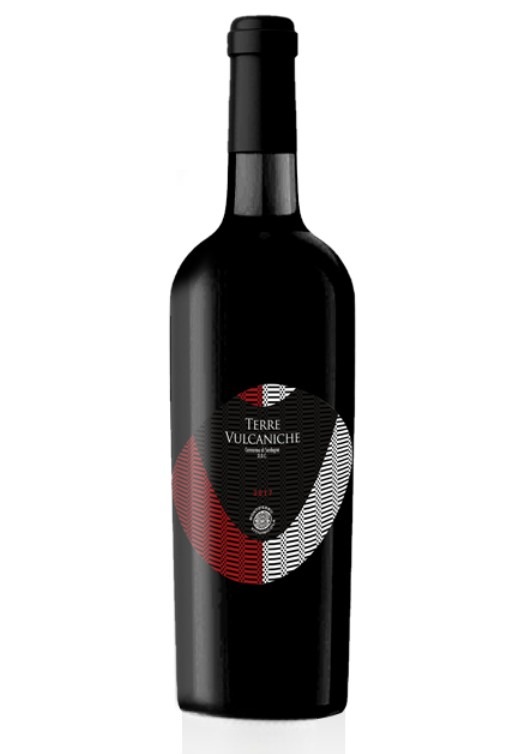
Terre Vulcaniche 2020 is a varietal red wine made from Cannonau (Grenache) grapes by Vitivinicola Montiferru, a small cooperative founded in 2007 in Santu Lussurgiu, in central-west Sardinia. I picked up this bottle on my latest trip to Sardinia, and it turned out to be a fascinating encounter with a very distinctive terroir.
The grapes are grown in the Montiferru massif, an extinct volcanic complex whose soils are rich in basalt and other volcanic minerals. This makes Terre Vulcaniche a fine example of one of Sardinia’s volcanic terroirs, where the mineral-rich soils leave a clear imprint on the wine. The fact that this expression comes from Cannonau – typically crafted in Sardinia in a rich, opulent, full-bodied style, often from granitic soils – makes the result even more intriguing.
Vitivinicola Montiferru itself is a small cooperative primarily focused on quality grape growing, while winemaking is carried out externally at Cantina il Nuraghe di Mogoro under the guidance of oenologist Enzo Biondo. The vineyards exclude systemic pesticides and rely only on manure as a natural fertilizer – a sign of the cooperative’s commitment to sustainability.
As an aside, it has been difficult to find updated information about this cooperative, and I could not reach them directly. If they have indeed ceased production, it would be a real loss for Sardinia’s volcanic terroir expressions.
Viticulture & Vinification
Details about the vineyard management and winemaking process are scarce. Based on style and quality, I can assume the grapes were harvested at moderate yields, with limited chemical intervention. Cannonau is prone to oxidation, so careful handling is essential.
Fermentation likely took place in stainless steel or concrete tanks, with the wine maturing partly in neutral oak barrels (second or third use) to allow gentle oxygenation without overpowering Cannonau’s delicate aromatics.
Tasting Profile
- Appearance: Deep ruby with a garnet rim – typical of Cannonau’s naturally oxidative tendencies.
- Nose: High aromatic intensity with layers of red fruit and savoury notes: wild strawberry, red plum, Mediterranean herbs (thyme, rosemary), tomato leaf, black pepper, and a striking mineral character reminiscent of steel, graphite, and ink, intertwining with the slight vegetal note and adding a delightful vibrancy. Subtle secondary and tertiary nuances follow – cocoa powder, prune, earth, forest floor, even a hint of cured meat.
- Palate: Dry (even if I suspect a gram or two of residual sugar), with medium(+) acidity – enough to keep the wine’s freshness – and medium tannins that stand out for their chalky, mineral texture. Alcohol is high (14%) but well integrated within the full body of the wine. Flavour intensity is marked, delivering an intriguing balance of fruit, herbs, and mineral depth.
- Finish: Long and persistent, sustained by both the flavour concentration and the tannic backbone.
Food Pairing, Ageing Potential & Final Thoughts
Terre Vulcaniche 2020 is a textbook example of how volcanic soils can shape a Sardinian Cannonau. Compared to the traditional Sardinian style of opulent, fruit-forward Cannonau, this expression is lifted by a unique mineral edge from Montiferru’s basalt-rich terroir.
To fully enjoy its elegance, I suggest serving it slightly cooler than usual for a red of this style – around 15–16 °C. The cooler temperature enhances freshness and sharpens the mineral tannins.
The wine shows impressive structure and balance, suggesting solid ageing potential. At five years of age, it remains vibrant, with fruit, herbs, and minerality still evolving beautifully.
In terms of food, Terre Vulcaniche pairs especially well with flavourful white meats like roasted chicken or grilled Sardinian porchetto. It also matches earthy vegetarian dishes such as aubergine with cheese.
In short, this is a remarkable volcanic Cannonau – proof that Sardinia’s diverse terroirs can give the island’s flagship grape variety entirely new dimensions.–16 °C, I recommend a slightly cooler temperature (8–10 °C) to emphasize its elegance and finesse even further.
 Sardinian Wine Stories
Leave a comment