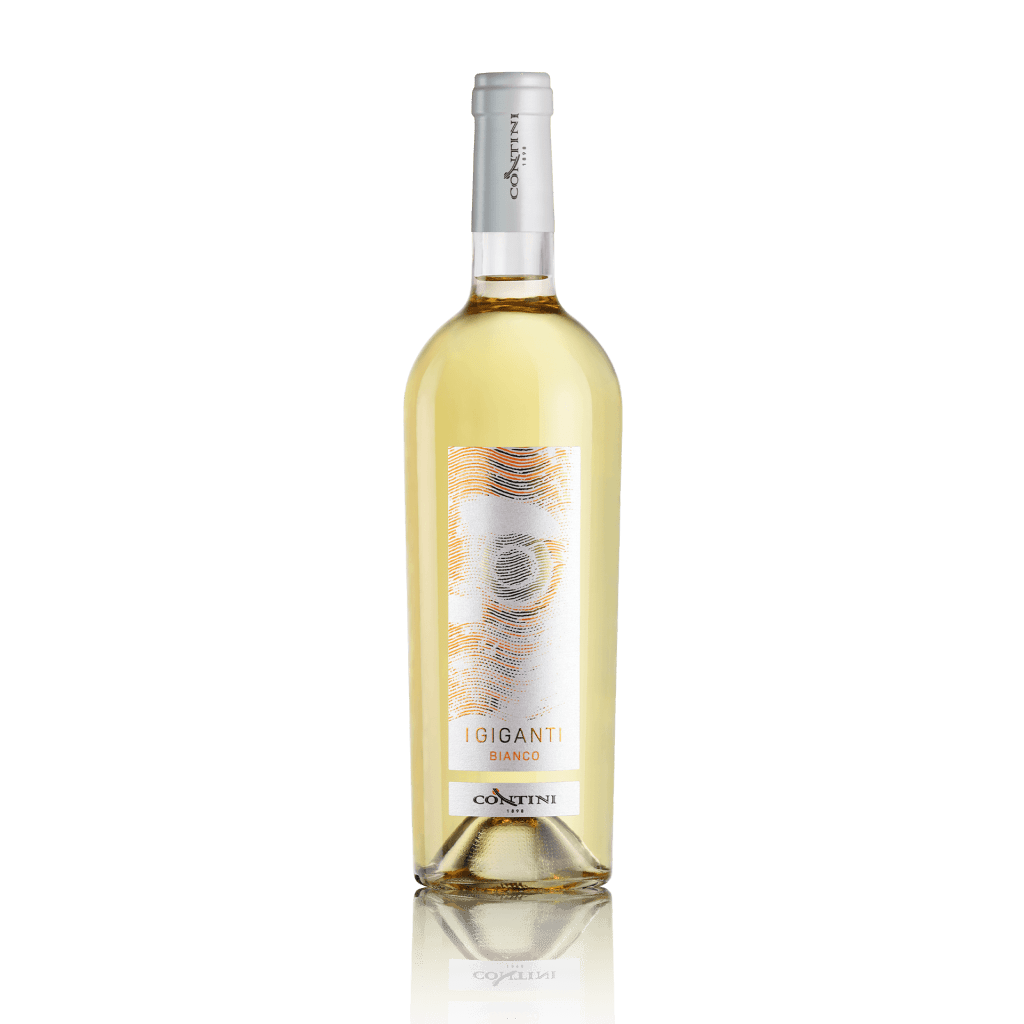
Today’s tasting is dedicated to I Giganti Bianco, one of the newer labels from Cantina Contini. This white wine is a carefully calibrated blend of Sardinia’s indigenous grape varieties, resulting in a style that is both gourmand and ripe, yet elegant and layered. It offers a clear sense of identity, showcasing Vernaccia in a convincing dry white interpretation, complemented by the aromatic finesse and freshness of Vermentino. Compared to the more exuberant, blockbuster Karmis—based on the same blend—I Giganti Bianco appears more restrained, poised and nuanced.
Cantina Contini is the oldest privately owned winery in Sardinia still in operation, having been founded in 1898. Based in Cabras, in centre-west Sardinia, the estate’s historic heart lies between the Sinis Peninsula and the Tirso Valley. While Contini is internationally renowned for its oxidative Vernaccia di Oristano—with Antico Gregori standing among the world’s great wines—the winery has long demonstrated a deep commitment to Sardinia’s wider ampelographic heritage, working with varieties such as Nieddera, Caddiu and Muristellu. In recent years, Contini has also explored more contemporary stylistic paths, offering modern interpretations of tradition, of which I Giganti Bianco is a compelling example.
Vineyard and Winemaking
I Giganti Bianco is produced from a blend of Vernaccia and Vermentino. The Vernaccia grapes are grown in the plains of the Sinis Peninsula, characterised by alluvial, sandy and lightly clay-rich soils. Vermentino, by contrast, comes from vineyards located at the foothills of the Monte Arci massif, where soils are of volcanic origin, with a significant presence of obsidian.
The climate is typically Mediterranean, with hot summers and mild winters, strongly influenced by the Maestrale wind for much of the year. The contrast between these two terroirs plays a key role in shaping the wine’s profile. Vernaccia tends to reach ripeness with higher sugar levels and lower acidity, contributing body and roundness, while Vermentino retains a fresher, more mineral-driven character.
Yields are moderate, at around 50–60 quintals per hectare. Vines are trained both on trellises and as bush vines (alberello), the latter being more common for Vernaccia. Grapes are hand-harvested at optimal ripeness and swiftly transported to the winery. Vinification begins with a gentle pressing, followed by inoculation with selected yeasts. Alcoholic fermentation takes place in oak tonneaux, both first and second use. After fermentation, the wine continues to mature in tonneaux for approximately six months on fine lees, with periodic bâtonnage to enhance texture and complexity, before bottling.
Tasting Profile
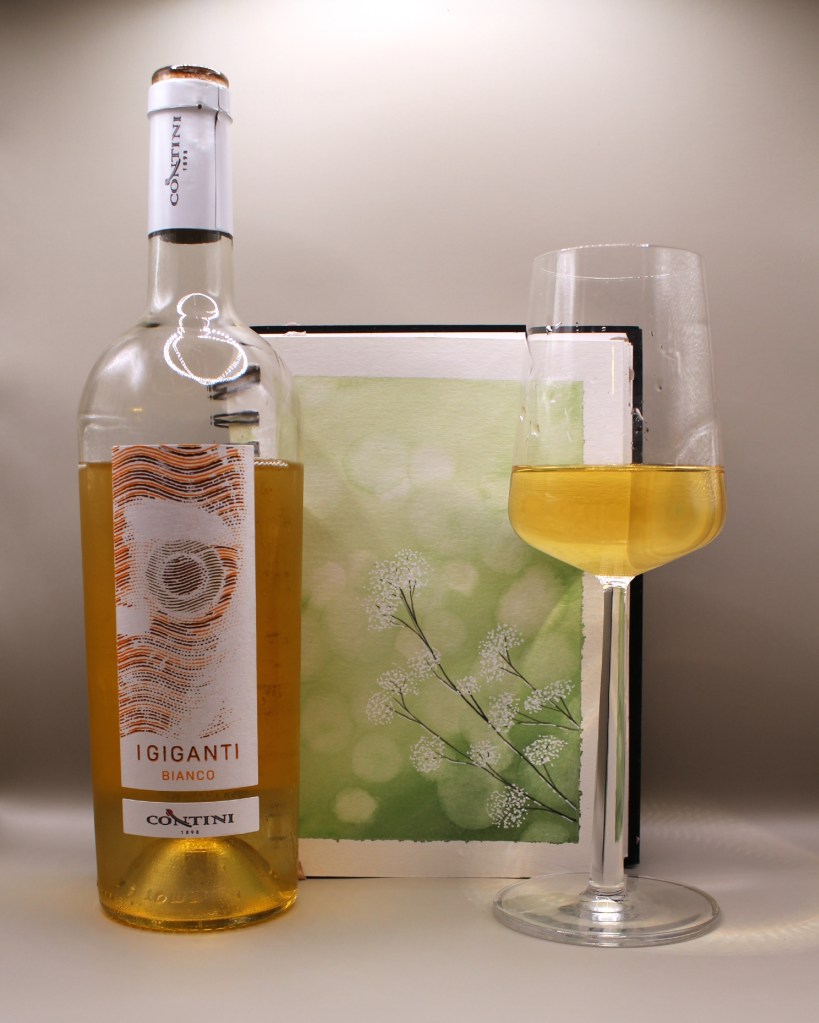
- Appearance: Medium lemon with a subtle golden hue.
- Nose: High aromatic intensity, with aromas of white blossom, orange blossom and Scotch broom, followed by ripe melon, pineapple and candied pineapple. Notes of crisp banana, vanilla and chamomile emerge alongside thyme, mastic and capers—an aromatic signature closely linked to the Sinis area. Bitter almond, a typical marker of Vermentino, completes the bouquet.
- Palate: Dry, with medium(+) acidity and 13.5% alcohol, resulting in a well-balanced and harmonious profile. Despite hints of sweet spice on the nose, the palate remains bone dry and refreshing. The wine is full-bodied, with a smooth, almost oily texture. Flavours mirror the aromatic profile, supported by a saline edge and a gently bitter undertone that adds vibrancy. The finish is medium(+), where the slightly bitter aftertaste integrates elegantly with notes of vanilla and chamomile, offering an intriguing and refined conclusion.
Final Thoughts
I Giganti Bianco is a wine that deserves serious attention. It strikes a convincing balance between ripe, expressive aromas and a vibrant, elegant palate, supported by a generous yet composed structure. Its complexity stems from the intelligent interplay between Vernaccia and Vermentino: the former contributes body, ripeness and roundness, while the latter brings freshness, bitterness and aromatic lift.
These complementary traits make the wine enjoyable on its own, yet particularly versatile at the table. It pairs beautifully with flavourful and slightly fatty fish dishes such as grilled salmon or muggine (grey mullet, a local speciality), as well as with bottarga—the dried and salted roe of grey mullet, often referred to as the “gold of Cabras”. In terms of ageing, I Giganti Bianco is best enjoyed within a couple of years of the vintage. Its appeal lies primarily in the precision and layering of its primary aromas, which are unlikely to gain further complexity with extended bottle age, as freshness gradually gives way to tertiary notes.


Leave a Reply