A Broader Look at Sardinian Traditions.
Although Wine of Sardinia is mainly devoted to wine in all its cultural and sensory richness, Sardinia’s drinking traditions extend far beyond the vineyard. The same deep connection between land, plants, and people that shapes the island’s wines can also be found in its liqueurs. Among them, none embodies Sardinia’s spirit better than Mirto — a drink that distils the very essence of the Mediterranean landscape. In particular, today I want to focus on white/green Mirto (I’ll follow up on red Mirto in another blog post soon).
What Is Mirto?
Mirto is made by macerating myrtle berries (mirto in Italian) in alcohol. The myrtle is an evergreen shrub characteristic of the Mediterranean macchia (scrubland), growing alongside thyme, broom, rosemary, immortelle, and mastic. Although common across the Mediterranean, the plant finds its most aromatic and vigorous expression in Sardinia. The unforgettable scent that greets travellers upon arrival — a blend of myrtle, immortelle, and sun-warmed herbs — is the island’s natural perfume.
Given this abundance, it is little wonder that Sardinians transformed myrtle into a liqueur. While similar drinks exist elsewhere, such as in Corsica, Sardinian Mirto stands apart for its scale, craftsmanship, and quality.
The Myrtle Plant
The myrtle bush can reach up to 5 metres (about 16 feet) in height (more details here). Its berries are small and firm, turning from green (pictured below) to blue-black (or occasionally reddish) as they ripen between November and January. The berries, while edible, are low in juice and high in tannins, making them ideal for liqueur production rather than direct consumption.
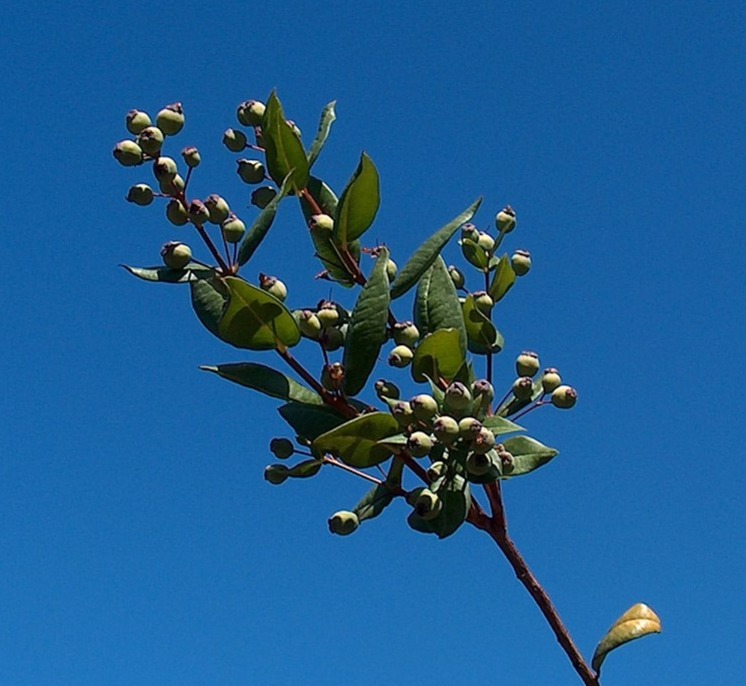
Picture author: Giancarlo Dessì, distributed under the GNU Free Documentation Licence.
Red and White (Green) Mirto
There are two main types of Mirto:
- Red (or purple) — made from ripe blue-black berries, rich in anthocyanins that lend colour and body.
- White (or green) — made from unripe berries and leaves, producing a lighter, herbal, and slightly more bitter liqueur.
The red version is the traditional and most famous one, but the white/green variation is equally fascinating — more aromatic, and uniquely refreshing.
Production Process for white Mirto
The production method of white Mirto is simple but requires patience and care.
A mix of unripe green berries and leaves (in roughly equal parts) is macerated in alcohol for about 40 days. The proportion should be modest — around 20% of the alcohol’s volume — to avoid excessive tannins or bitterness. Adding one or two small strips of lemon zest enhances freshness and balances the myrtle’s resinous aroma.
After about 40 days, the alcohol turns a brilliant green, while the leaves and berries lose their pigment. The infusion is then strained (no need to press the solids) and blended with a sugar syrup made from water and sugar amounting to 65% of the water. So, for instance for 1 litre of alcohol, use:
- 1 litre (4¼ cups) of alcohol
- 1 litre (4¼ cups) of cold water
- 650 grams (about 3¼ cups) of white sugar
The mixture is then bottled and left to rest for at least another 40 days, allowing the flavours to harmonise. With time, the aromas deepen and integrate beautifully.
Colour and Style
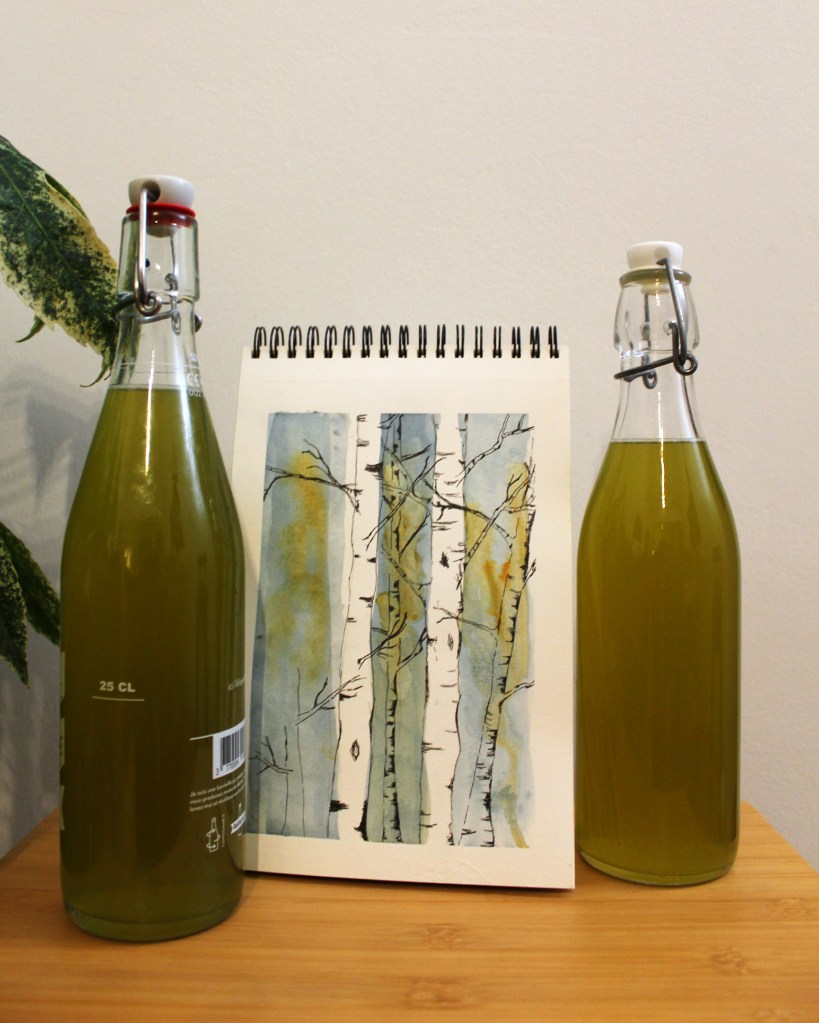
The finished liqueur has a deep yellow-green hue. It is also a bit hazy, as it is unfiltered. Filtered commercial versions, lighter and more brilliant in colour, are sold as Mirto Bianco (white Mirto). Generally, white/green Mirto is more herbal and bitter, while red Mirto shows riper, sweeter notes with hints of balsam and spice.
A Personal Note
I bottled my latest batch of green Mirto on the 15th of October, meaning it won’t be ready before the end of November. When the time comes, I’ll share a dedicated tasting note — once the Mirto, like a good Sardinian wine, has had time to rest and reveal its full soul.
 Sardinian Wine Stories

Leave a comment