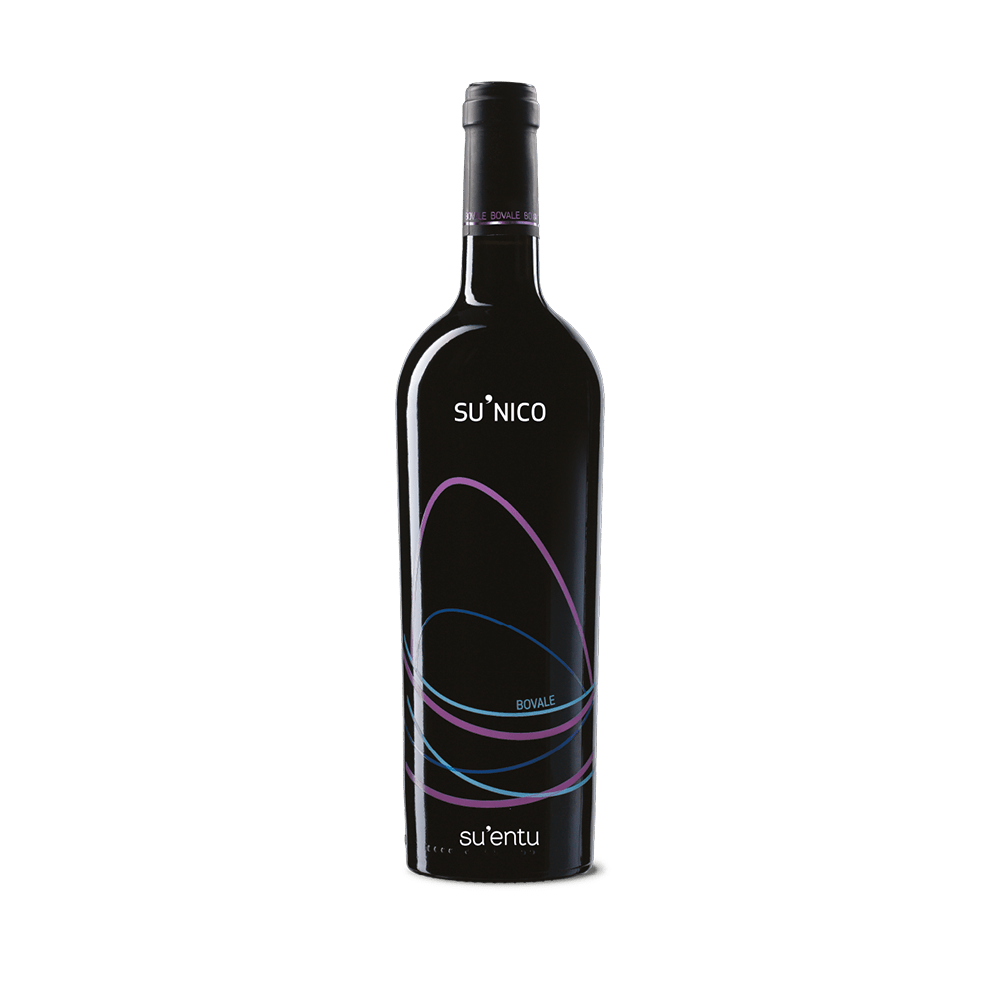
This tasting note is dedicated to Su’Nico, a varietal Bovale produced by the innovative Cantina Su’Entu. Bovale is another hidden gem among Sardinia’s native grape varieties — capable of yielding tannic, structured, full-bodied wines of great elegance, aromatic intensity, and personality. While Bovale’s historic heartland is northern Campidano (centre-western Sardinia), Su’Nico comes from the slightly more inland Marmilla area and represents one of the most refined contemporary interpretations of the variety.
Cantina Su’Entu, based in Sanluri, cultivates around 40 hectares of vineyards in Marmilla — a landscape constantly shaped by wind, an element that ensures ventilation, plant health, and a distinctive saline imprint on the grapes. The marked diurnal shifts of the area further support slow, balanced ripening. To preserve freshness and aromatic precision, harvest for the top selections takes place at night, entirely by hand.
Vineyard and Winemaking
Su’Nico is sourced from vineyards surrounding the winery, planted on a small hill along the road from Sanluri to Lunamatrona, in the heart of Medio Campidano. These young vines (no more than ten years old) are trained on a cordon-spur system, at a density of around 5,000 vines/ha, with very low yields (approx. 40 q/ha).
The soils are calcareous-marly with significant clay content, providing richness, alcohol potential, freshness, and a distinct mineral edge. Marmilla’s warm days and cool nights further concentrate aromatic compounds in the grape skins.
Harvest takes place manually, at night, in late September. After destemming and crushing, the must macerates on the skins for about seven days, undergoing simultaneous alcoholic fermentation in temperature-controlled stainless steel (25°C). This gentle extraction helps preserve purity and highlight the terroir-driven traits of Bovale.
After fermentation, Su’Nico matures for 12 months in French oak barriques (first and second fill), followed by bottle ageing prior to release.
Tasting Profile
• Colour
Deep ruby with a delicate purple rim — quite typical of Bovale.
• Aromas
High aromatic intensity. A broad, expressive bouquet, including: violet, red and black cherry, black plum, blueberry, dried thyme, confit tomato, tomato leaf, olive tapenade, spirited cherry, wet wood, damp leaves, forest floor, tobacco, and a very subtle touch of clove. With a few minutes of air, elegant cocoa nuances also emerge. Despite the oak ageing, wood-derived notes are understated, highlighting Bovale’s impressive capacity to integrate oak seamlessly.
• Palate
Dry, with high acidity and high, chalky, fine-grained tannins — beautifully refined through oak maturation. Alcohol is 14.5%, typical for Marmilla’s warm climate and clay-rich soils, yet well balanced by the wine’s full body and concentration. The palate shows a very high flavour concentration, complemented by a chewy tannic texture. Yet, the vibrant acidity lifts the structure of the wine. The finish is long, savoury, and balsamic with notes reminiscent of juniper and balsamic vinegar.
A wine of notable depth, intensity and precision — elegant yet powerful.
Food Pairing, Ageing Potential & Final Thoughts
Su’Nico offers another compelling demonstration of Bovale’s potential in Sardinia. While it may not yet represent the absolute pinnacle of the variety (still to be explored in future tastings), it is undoubtedly a standout interpretation and stylistically quite distinct from other notable Bovale bottlings such as Cavaliere Sardo from Cantina di Mogoro.
Marmilla’s clay-rich soils give Su’Nico roundness, fruit concentration, and alcoholic warmth, all clearly reflected in the glass.
Su’Nico should evolve gracefully for at least 5 years (up to a maximum of around 10), developing tertiary notes while retaining its structural core.
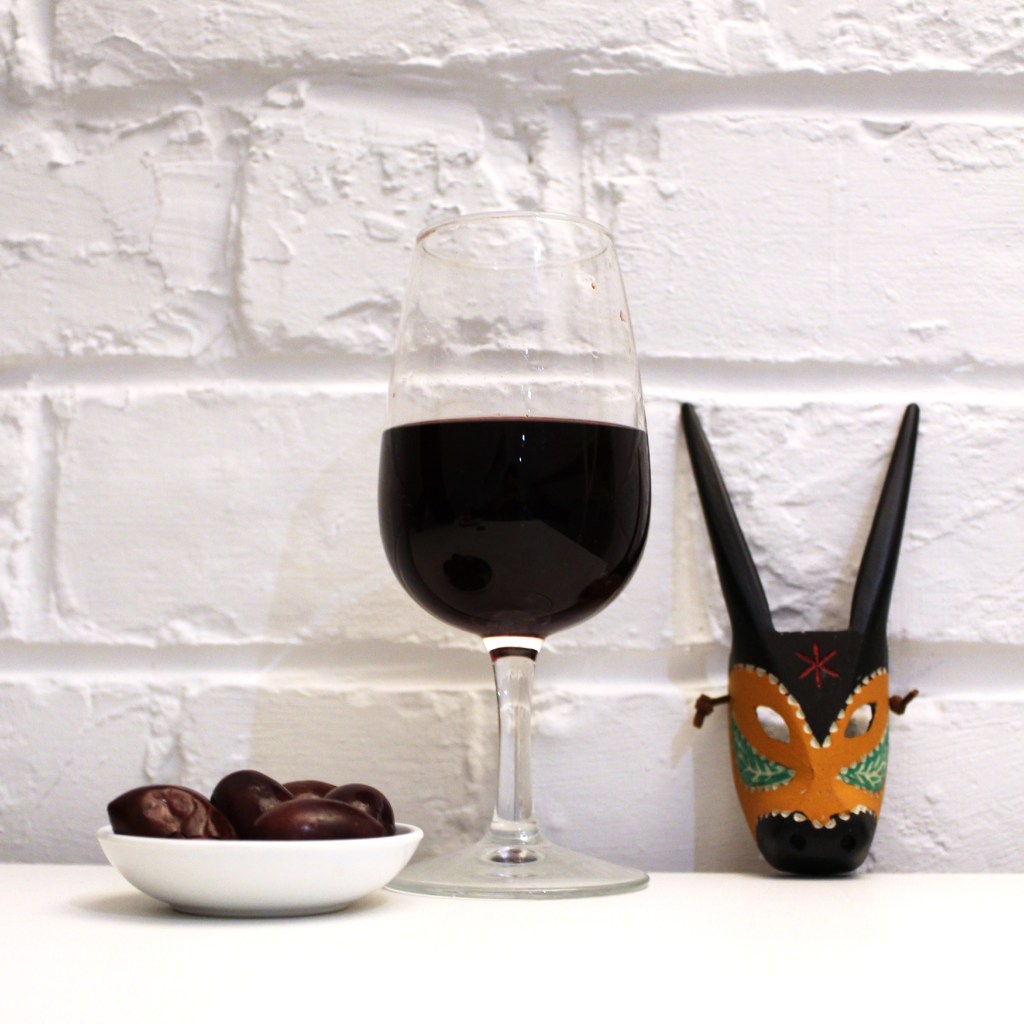
Its youthful fruit concentration makes it enjoyable on its own as a meditative young red, but it also pairs beautifully with a Sardinian/Italian aperitivo board: mixed cheeses (soft and aged), charcuterie, olives, and rustic bread.
A bold, characterful wine — and a fascinating expression of what Bovale can achieve in Marmilla.
 Sardinian Wine Stories
Leave a comment