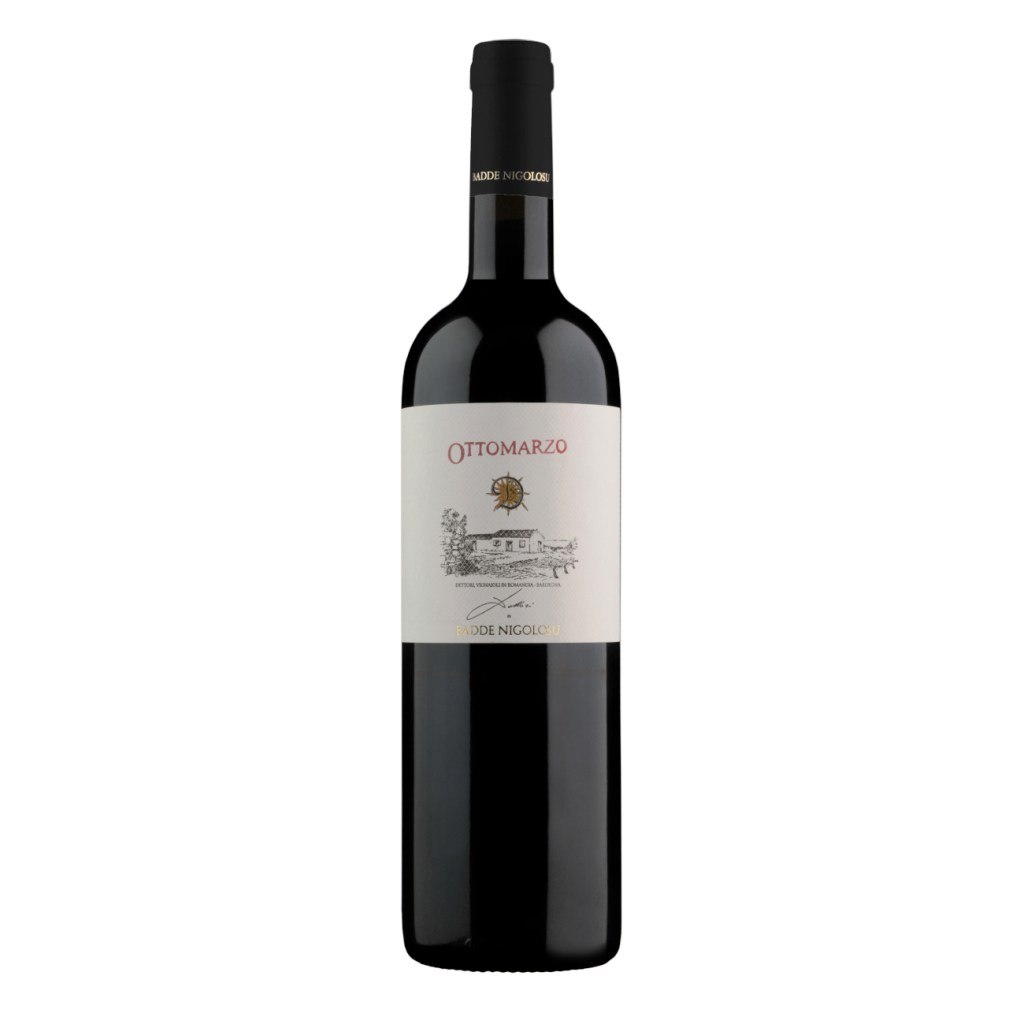
This tasting note is dedicated to Ottomarzo, a truly distinctive red wine and one of the very few examples of a varietal Pascale wine. Pascale is a Sardinian black grape variety that has traditionally been used in blends, very rarely bottled on its own, most likely because of its challenging viticultural and enological profile. When used in blends, it is typically valued for its ability to add freshness and elegance.
A varietal Pascale could hardly come from any producer other than Tenute Dettori. A mythical figure for some, a maestro for others, and an uncompromising natural winemaker for all, Dettori is undoubtedly one of Sardinia’s most singular and influential winegrowers. His wines are radical expressions of terroir, tradition, and personal vision, often challenging conventional expectations but always deeply authentic.
Tenute Dettori is located in the extreme north-west of Sardinia, in the Romangia area, between Sassari and Castelsardo. More precisely, the vineyards lie in Badde Nigolosu, a historic cru overlooking the sea. The estate works exclusively with traditional Sardinian grape varieties, vinified as 100% varietal wines from individual crus, following biodynamic principles and relying solely on natural fermentations. Dettori’s wines are, quite literally, an ode to terroir in its purest sense.
Vineyard and Winemaking
Ottomarzo is produced from low-yielding alberello (bush-trained) vines grown on calcareous soils, at a short distance from the sea. The vineyards are surrounded by Mediterranean maquis and woodland, in a setting where the boundaries between vineyard, nature, and landscape are intentionally blurred. The estate’s goal is to recreate a natural equilibrium between the ecosystem, the vine, and the winemaker, in line with biodynamic philosophy.
Viticulture is rigorously natural: permanent cover crops are encouraged, no synthetic products are used either in the vineyard or cellar, and grapes are harvested manually at full phenolic ripeness.
In the cellar, interventions are kept to an absolute minimum. Fermentation takes place in open vats, lasting between two and ten days, without the addition of selected yeasts or sulphur dioxide, relying exclusively on indigenous yeasts naturally present on the grape skins.
The wine is then fermented and aged in concrete vats for approximately 18 months, without oak influence. No chemical adjustments are made; the wine is unfiltered and unfined, followed only by bottle ageing prior to release. Meticulous vineyard work ensures that the grapes arrive in the cellar already expressing everything needed to produce a great wine.
Tasting Profile
(Bearing in mind that, as with all low-intervention wines, bottle variation is inevitable)
- Colour: Medium ruby, slightly hazy due to the absence of filtration, with a pronounced garnet rim — entirely consistent with a wine approaching ten years of age.
- Aroma: Exceptionally complex and layered. The wine shows high aromatic intensity, with notes of violet, red cherry, red plum, pomegranate, cassis, hay, dried herbs, Mediterranean maquis and garrigue. Secondary and tertiary nuances include cooked fruit, yoghurt, cooked and spirited cherry, leather, sweet tobacco, earth, forest floor and dates. A wine that invites prolonged contemplation in the glass.
- Palate: Dry, with high acidity and high, still firm and slightly stalky tannins, clearly indicating outstanding ageing potential. Alcohol is high (15%), yet remarkably well integrated thanks to the wine’s concentration, structure and freshness. Full-bodied and powerful, supported by pronounced minerality that emerges more clearly on the palate than on the nose. Despite its intensity, tannins and acidity confer a surprising elegance and balance. The finish is extremely long, chewy and astringent, with fresh red-fruit notes resurfacing to cleanse and refresh the palate.
Food Pairing, Ageing Potential & Final Thoughts
Ottomarzo is a truly unique wine, far removed from the fresh, immediate, “glou-glou” styles that dominate much of today’s natural wine scene. It is a wine that demands time, attention and air: decanting for at least one hour is strongly recommended to allow it to fully express itself.
For me, this wine was a genuine revelation. Its intensity and concentration mean that each sip requires reflection; it is very much a meditation wine, rather than something to drink casually. The distinctive aromatic profile of Pascale — an almost forgotten grape — offers a compelling sense of difference and identity that rewards thoughtful tasting.
The combination of high alcohol, concentration, acidity and tannin gives Ottomarzo an extraordinary ageing potential. Dettori suggests 20–25 years, a claim I fully agree with. In fact, opening this bottle at ten years felt almost premature, leaving me wondering about the tertiary complexity that may emerge with further ageing (fortunately, a couple more bottles rest safely in my cellar). Ideal serving temperature is cellar-cool, around 13 °C.
In terms of food pairing, the wine’s power calls for equally structured and flavour-intense dishes: porceddu (suckling pig) or a well-aged Pecorino Sardo DOP would be natural and deeply satisfying matches.

 Sardinian Wine Stories
Leave a comment