This tasting note is dedicated to Dominariu, a varietal Bovale red wine produced by Melis, a family-run winery based in Terralba — the reference terroir for Bovale-based wines and the heartland of the Campidano di Terralba DOC.
Bovale is one of Sardinia’s lesser-known native grape varieties, capable of producing structured, tannic and full-bodied wines, yet often marked by elegance and aromatic intensity. While closely related to Carignano, Bovale shows a number of distinctive traits — a topic I will explore further in a dedicated post.
In a previous article, I covered Su’Nico, another varietal Bovale produced in the inland Marmilla region, further south. That expression leans towards opulence and power. Dominariu, by contrast, follows a more international style, resulting in a leaner, more delicate balance. This is the outcome not only of cellar choices, but also of the sandy soils of Terralba, which tend to favour finesse and aromatic clarity.
Melis is based in Terralba (northern Campidano, central-western Sardinia) and farms around 30 hectares of vineyards, focusing primarily on varieties typical of the area, such as Bovale and Vermentino. Over time, the range has expanded to include other Sardinian cultivars — including Cannonau and the rare Barbera Sarda — alongside international varieties such as Chardonnay and Sangiovese.
Vineyard and Winemaking
Dominariu is made from 100% Bovale. The grapes are grown on alluvial soils, sandy-loam with a clay component, poor in skeletal material and with a slightly sub-acid pH, in the area between Uras and Terralba. The vines are approximately 30 years old.
The sandy soils of this area — largely loamy and silty sands — are widely regarded as a key factor in taming Bovale’s naturally assertive profile, making Terralba one of the most suitable terroirs for the variety.
Harvest takes place at the end of September, once Bovale — a late-ripening variety — has reached optimal phenolic maturity.
In the cellar, the grapes are destemmed and crushed, followed by alcoholic fermentation in stainless steel at a maximum temperature of 30 °C. Maceration lasts for around 10 days. During fermentation, frequent remontage (approximately every six hours for 15 minutes) is carried out to enhance aromatic expression while avoiding reductive notes.
After fermentation, the wine undergoes natural decantation and is then aged in stainless steel for 12 months. Following bottling, it rests for a further six months before release.
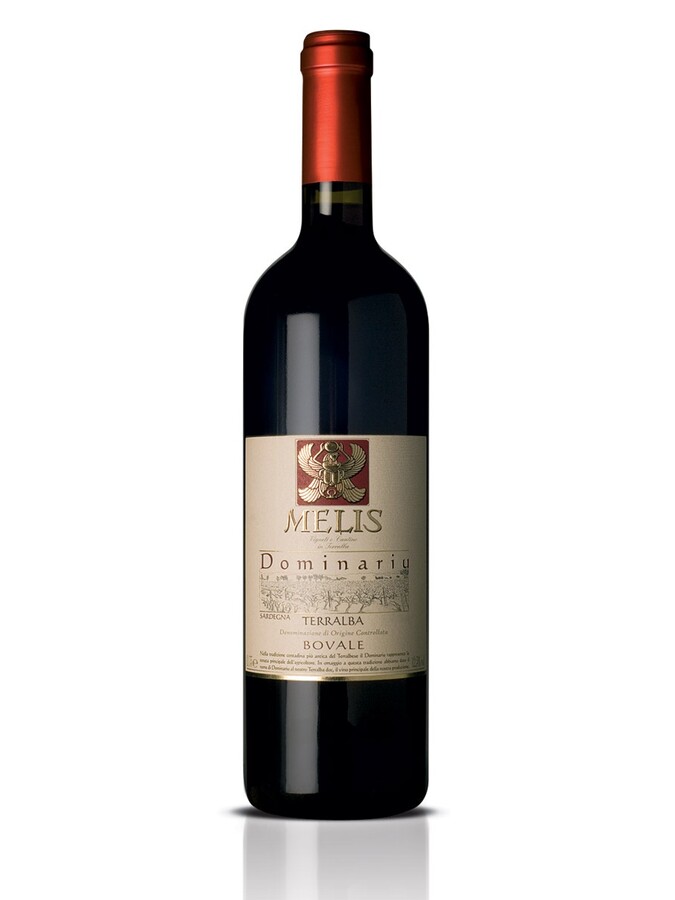
Tasting Profile
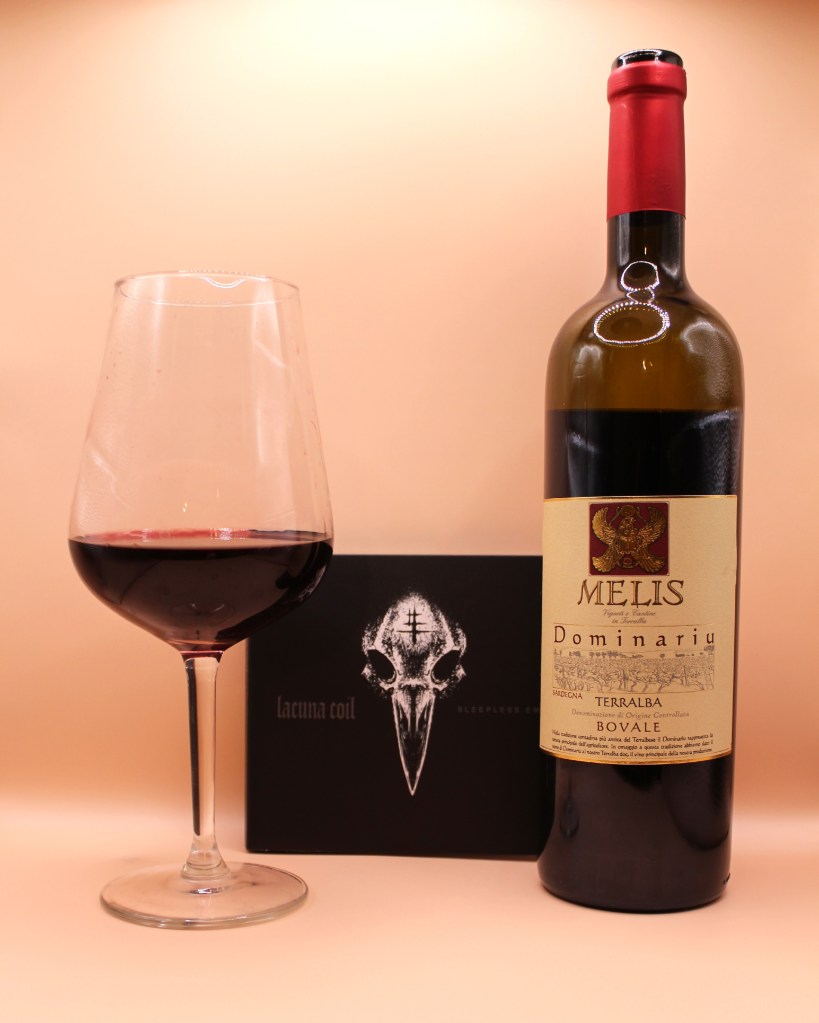
- Colour – Medium ruby, with a delicate purple rim — a fairly typical hue for Bovale.
- Nose –High aromatic intensity, with a layered and expressive bouquet. Notes of violet, red cherry, black cherry, black plum and blueberry emerge first, followed by dried Mediterranean herbs (thyme), olive tapenade, cherry liqueur, liquorice, cooked fruit and prune. The absence of oak ageing plays a decisive role in preserving the wine’s fruit-driven character. With a few minutes of air, subtle cocoa notes begin to appear.
- Palate – Dry, with high acidity and tannins slightly above medium — unsurprising for a tannin-driven variety such as Bovale — yet chalky and fine-grained. The gentle, oak-free winemaking helps to temper Bovale’s sometimes angular tannins. Alcohol sits at a moderate 13%, reinforcing a restrained and elegant interpretation of the grape. The overall impression is surprisingly Burgundian in its discretion and poise. Flavour intensity is high, delivering a well-defined and engaging palate. The finish is medium (+), marked by a subtle bitter note reminiscent of turpentine — a distinctive and characterful signature.
Food Pairing, Ageing Potential and Final Thoughts
Dominariu is yet another compelling example of what Bovale can achieve in Sardinia. While it may not represent the grape’s most profound expression — a title still contested, and one I plan to explore further — it is certainly a strong contender and offers a markedly different interpretation compared to wines such as Su’Nico by Cantina Su’entu.
Elegant and well-balanced, Dominariu achieves a level of finesse that is not easily associated with a “difficult” variety like Bovale. If poured blind and presented as a wine from France, few would raise an objection.
The sandy soils of the Terralba plain clearly play a decisive role in softening Bovale’s more forceful traits. That said, this elegance comes with a trade-off: Dominariu is best enjoyed young, while its fruit-driven profile is at its most expressive. A moderate ageing of up to 4–5 years can add a touch of tertiary complexity, but extended cellaring is not recommended. Serve at no more than 16 °C. In terms of food pairing, this is a true passe-partout wine. It pairs effortlessly with everyday dishes — from spaghetti with tomato sauce to roasted lamb — as well as with charcuterie and cheese.
Simply put, it is a go-to wine for the table.
 Sardinian Wine Stories
Leave a comment