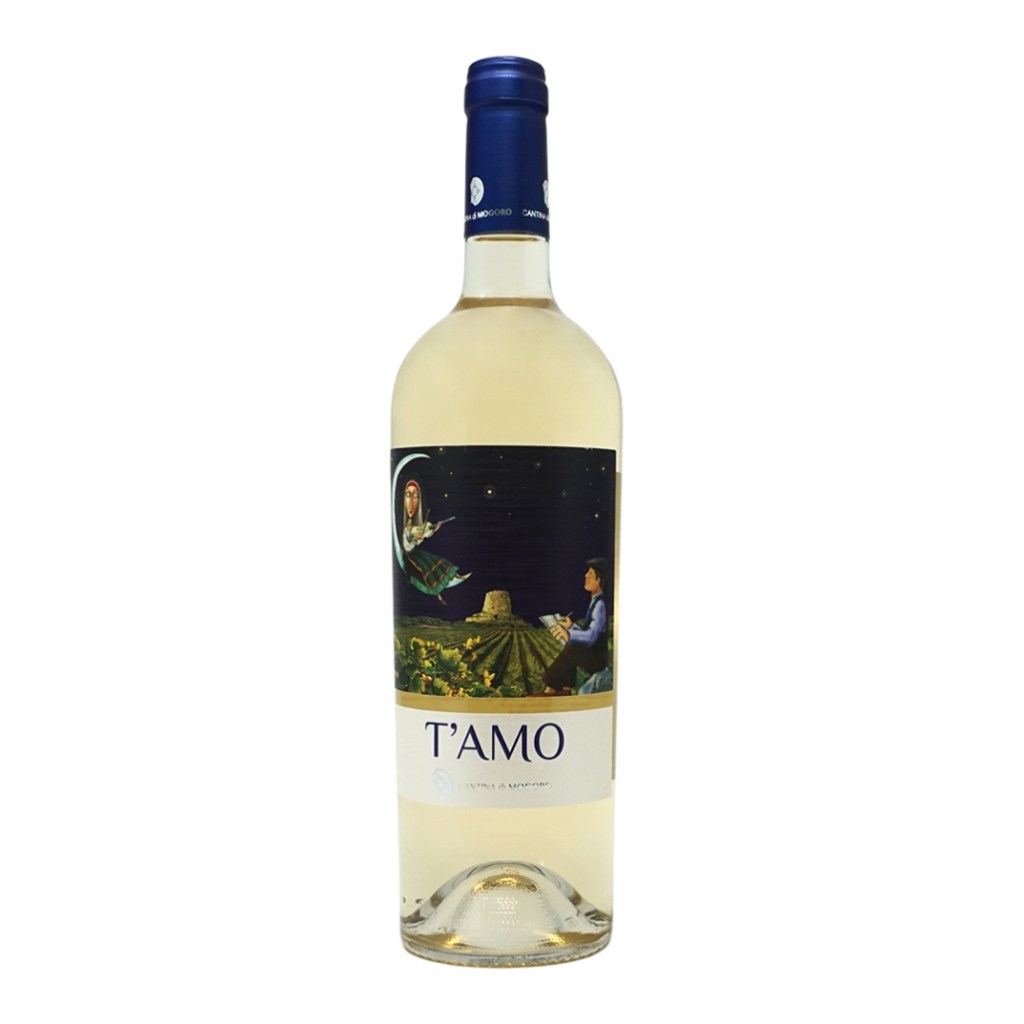
Today’s tasting is dedicated to T’Amo, a varietal Nuragus white wine produced by Cantina di Mogoro, in central-western Sardinia. This wine is one of the few labels offering a modern interpretation of Nuragus, a grape that has long played a different role in Sardinian viticulture.
Nuragus is an indigenous Sardinian white grape variety, mostly planted in southern and central Sardinia. Traditionally it has been considered a workhorse variety, valued for its productivity and resistance to disease. Because of these qualities, it was the most widely planted white grape in Sardinia until the 1990s, when its popularity began to decline significantly. Today, the area planted with Nuragus is roughly one third of that devoted to Vermentino, now the island’s most popular white variety.
However, producers such as Cantina di Mogoro are demonstrating that Nuragus can also produce wines of real quality. When its vigour is carefully managed in the vineyard and the grapes are harvested at optimal phenolic ripeness, Nuragus can yield wines that are delicately perfumed, fresh and vibrant.
This philosophy fits perfectly with the identity of Cantina di Mogoro, which specialises in wines made from indigenous grape varieties closely linked to the Alta Marmilla sub-region. Besides Nuragus itself, the winery also produces notable wines from the white Semidano grape and the red Bovale.
Cantina di Mogoro was founded in 1956 as a co-operative and remains one of the few successful co-operative wineries in Sardinia today, demonstrating that this model can still deliver wines of real quality. The winery gathers grapes from approximately 250 hectares of vineyards owned by its members.
Mogoro itself is also well known across Sardinia for its textile craftsmanship, particularly the production of traditional carpets. Each year the town hosts the Fiera dell’Artigianato Artistico della Sardegna, an important fair dedicated to Sardinian craftsmanship.
Vineyard and Winemaking
T’Amo is a 100% Nuragus varietal wine. Nuragus is a highly vigorous and late-ripening variety.
The grapes are grown in trellised vineyards located in the hills around Mogoro and neighbouring villages, on calcareous soils with good drainage, ideal for producing wines with finesse and mineral character. The climate is Mediterranean, with mild winters and warm summers moderated by the Maestrale wind. Average annual rainfall is around 500 mm.
The grapes are harvested by hand, normally during the second half of September. Yields average around 100 quintals per hectare. While this may appear relatively high by international standards, it remains moderate compared with the historically very high yields typical of Nuragus.
After harvest, the grapes are quickly transported to the winery, where they undergo gentle pressing. The free-run must is then fermented in temperature-controlled stainless-steel tanks using selected yeasts.
Once alcoholic fermentation is completed, the wine continues to mature in stainless steel on its fine lees for about forty days, with frequent bâtonnages to enhance both texture and aromatic complexity, before final bottling.
Tasting Profile
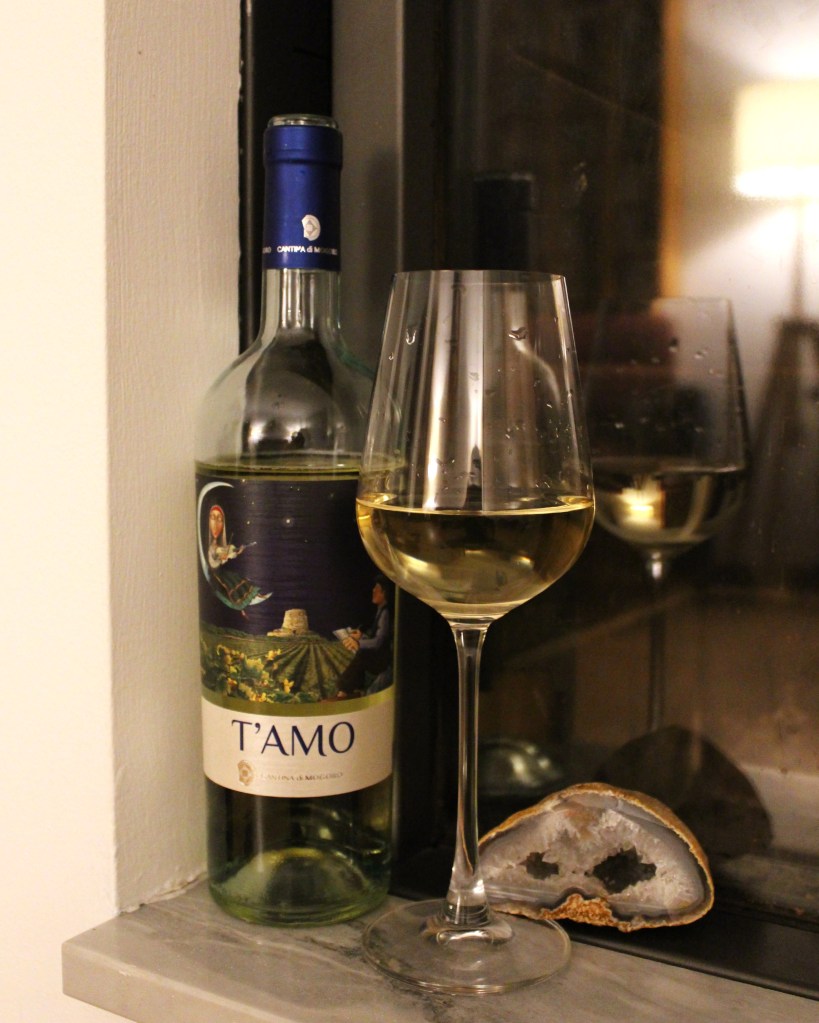
Appearance: Pale lemon.
Nose: Medium(+) aromatic intensity. Aromas of white blossom and orange blossom, followed by yellow apple, pear, melon, ripe pineapple. Notes of hazelnut and eucalyptus emerge too, together with a delicate wet-stone minerality.
Palate: Dry, with medium(+) acidity and medium alcohol (12.5%), providing very good balance. The wine is medium-bodied, combining refreshing acidity with a slightly rounded texture. Initially almost oily, the palate then reveals a delicate mineral astringency that adds structure. Flavours broadly mirror the aromatic profile of the nose, with a subtle note reminiscent of eucalyptus honey adding complexity. The finish is medium, clean and refreshing, confirming the wine’s balanced and approachable style.
Final Thoughts
T’Amo is a pleasant and easy-drinking wine, ideal as an apéritif or for a relaxed summer lunch. It is best enjoyed young, as its aromatic profile revolves around fresh blossom and ripe fruit, which would likely lose much of their vibrancy with extended ageing.
Nonetheless, this wine clearly demonstrates Nuragus potential to produce quality wines. When yields are managed carefully, the variety can deliver a refined yet distinctive aromatic profile, where fruit and freshness are complemented by herbal and nutty nuances — a character that is currently being rediscovered by a new generation of Sardinian producers.
More tastings of varietal Nuragus will certainly follow. In terms of food pairing, T’Amo can work well with vegetable tempura or spanakopita, where the wine’s freshness balances the richness of the dish, while its herbal notes harmonise nicely with the vegetable flavours.
 Sardinian Wine Stories
Leave a comment