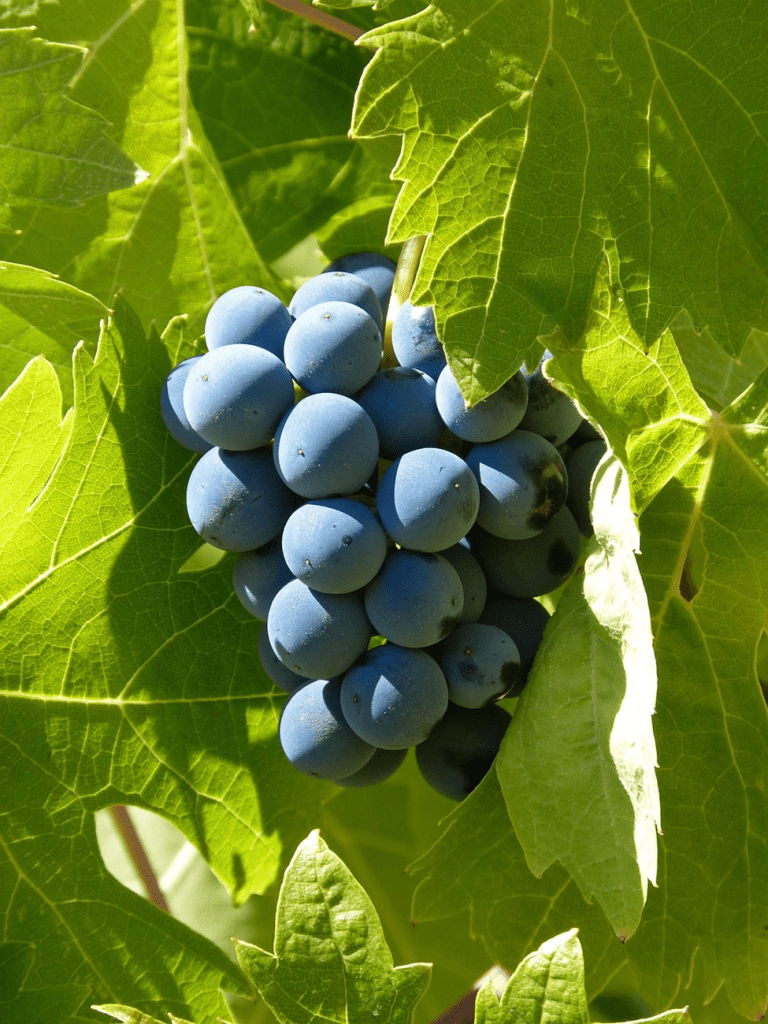
Cannonau is the Sardinian red grape variety par excellence. With almost 27% of total plantings, it is by far the most cultivated variety on the island and contributes to several of Sardinia’s most well-known wines.
However, despite being Sardinia’s signature red, Cannonau is not unique to the island. It is in fact genetically the same grape as Grenache Noir in France and Garnacha Tinta in Spain.
History & Origins
The shared importance of this variety across the Western Mediterranean is testimony to centuries of cultural exchange and viticultural history. While the precise origin of Cannonau/Grenache/Garnacha remains disputed (a topic I’ll explore in a future post), the variety has been cultivated in Sardinia and Spain for at least five centuries. For this reason, it is considered indigenous in each of these regions.
In France and Spain, Grenache/Garnacha rank among the most planted red varieties (2nd and 3rd respectively). In Italy, however, Cannonau is almost exclusively grown in Sardinia, where it enjoys a status unlike anywhere else.
This offers an interesting point of difference with Italy and potential endless comparison possibilities between wines produced in Sardinia, France and Spain.
Viticultural Characteristics
Cannonau has been Sardinia’s leading grape since the 1950s. Its surface area has declined in line with the general reduction of vineyards across the island, but the decline has been less pronounced than for other traditional workhorses such as Monica and Nuragus. Today, Cannonau remains the most planted variety, with around 7,500 hectares (27% of total planting), of which about 5,000 hectares are concentrated in the province of Nuoro (where Cannonau accounts for about 70% of total plantings).
Several traits explain Cannonau’s success in Sardinia (and elsewhere too):
- High yields and excellent adaptability to warm climates.
- Upright growth, making it suitable for bush-vine training (alberello), still common in Sardinia.
- Tolerance for poor, dry soils, where its vigour is naturally contained.
- Ability to accumulate high sugar levels, which often leads to high alcohol wines—something winemakers must carefully balance, especially when aiming for dry, balanced wines.
Wine Style & Aromas
Cannonau is relatively low in anthocyanins, meaning wines made purely from Cannonau are not deeply coloured.
Typical features of varietal Cannonau wines include:
- Aromatic profile: red floral notes, ripe red fruit, rustic undertones, spicy and herbal accents.
- Structure: high alcohol, low to medium tannins, and low acidity, normally suggesting a round structure.
- Aging potential: while basic styles are approachable young, low yields and higher concentration can produce wines with greater concentration of pigments and tannins, and capable of long aging. With maturity, Cannonau can develop more spicy, earthy, and nutty notes.
However, Cannonau’s subtle aromas do not always pair well with heavy oak aging, which can overpower its character.
Denominations & Sub-Zones
The most important appellation is Cannonau di Sardegna DOC, which, in the 80s has been extended to cover the entire island. With hindsight, this was an overly broad designation, limiting recognition of distinct terroirs.
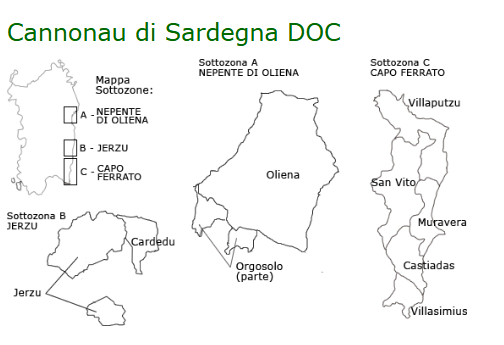
Within the DOC, however, there are important sub-zones. The Classico zone is limited to Nuoro and Ogliastra provinces, the historic heartland of Cannonau. In addition, there are also three high-quality sub-zones:
- Oliena (Nepente di Oliena DOC) – producing round, deep wines.
- Jerzu (Ogliastra) – known for perfumed, wild-aromas wines.
- Capo Ferrato (Sarrabus, SE Sardinia) – offering distinctive expressions tied to its coastal terroir.
While great examples of Cannonau can be found anywhere in Sardinia (and I’ll happily provide examples of them in the future), some of the best excellences come from the Nuoro province, as also recognised from the PDO specifications. Just to make an example, the Cannonaus produced in Mamoiada, a village close to Nuoro, stand out as full-bodied and opulent, reflecting the prestige of the area.
Modern Trends
While Cannonau is traditionally associated with powerful, high-alcohol reds, a new wave of producers is experimenting with a lighter, “Burgundian” style. These wines are paler, spicier, and fresher, echoing similar trends seen with Garnacha in Spain’s Sierra de Gredos or Australia’s Grenache.
Soils & Terroirs
The diversity of Sardinia’s soils plays a defining role in shaping Cannonau:
- Granite (common in Nuoro) are poor, draining soils that restrain vigour and yield concentrated wines, much like the gravelly soils of Châteauneuf-du-Pape.
- Sandy soils: producing lighter, more delicate expressions.
- Volcanic soils (basalt and obsidian): imparting distinctive mineral notes, similar to theLlicorella soils of Priorat.
Blends & Mandrolisai
Cannonau also plays a key role in Mandrolisai DOC, a wine from central Sardinia based on Muristellu (Bovale Sardo), Monica, and Cannonau. These blends add complexity and highlight Cannonau’s versatility.
Cannonau can then be used in several PGI wines produced in the region, the most famous of which is the ‘Isola dei Nuraghi’ indication.
Conclusion
Cannonau remains Sardinia’s red passion: deeply rooted in the island’s culture, widely planted, and stylistically versatile. From opulent Nuoro wines to elegant new-wave interpretations, it offers a rich spectrum of styles.
The list of notable producers is long, and singling out a few would do injustice to many. I’ll dive into individual examples in future tasting notes—one sip at a time. 🍷
 Sardinian Wine Stories
Leave a reply to Cannonau or Garnacha: What Came First, the Chicken or the Egg? – Sardinian Wine Stories Cancel reply