Introduction
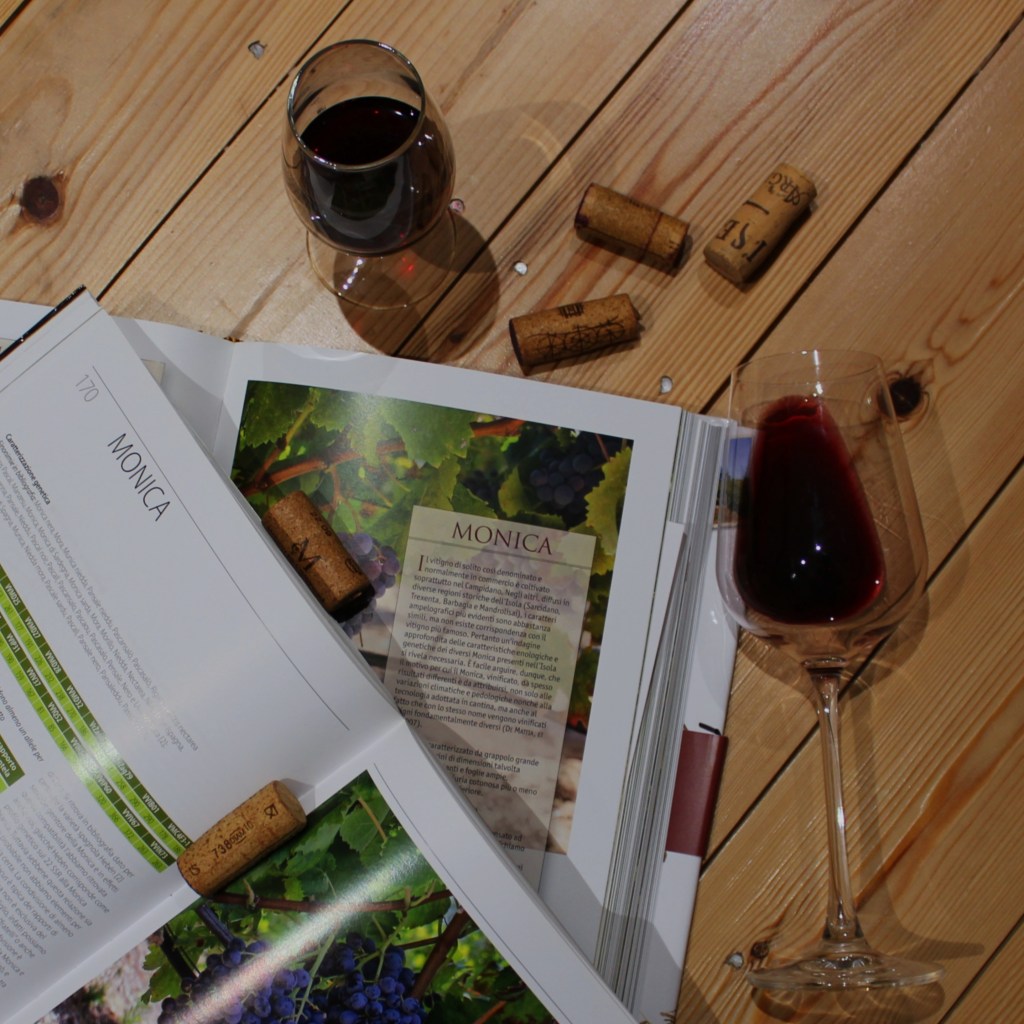
Monica is Sardinia’s second most planted black grape variety, closely followed by Carignano, the rising star of Sardinian viticulture. It is cultivated across the island, but especially in the south, and is considered an ancient variety, most likely indigenous to Sardinia.
Its story is, in many ways, similar to that of Nuragus. Until relatively recently, Monica was highly valued for its productivity. However, high yields often came at the expense of quality. As long as quantity remained the primary focus of viticulture, this was not considered a major issue.
As Sardinian wine production gradually shifted towards quality-oriented viticulture, Monica began to suffer significantly. Over the last two decades, the surface under vine dedicated to Monica has declined sharply, also because other red varieties appeared more aligned with international consumer preferences. Today, however, that decline seems to have stabilised. Thanks to improvements in both viticulture and winemaking, producers are crafting increasingly compelling expressions of Monica. At the same time, both winemakers and consumers are beginning to appreciate the distinctive personality that Monica can bring to Sardinian wine. These developments suggest that Monica’s journey into fine wine may only just be beginning.
History & Origins
Like many Sardinian grape varieties, Monica is often — and probably mistakenly — said to originate from Spain. Due to the centuries-long historical connection between Sardinia and Spain, several varieties are indeed shared between the two regions (for example: Cannonau/Grenache/Garnacha, Carignano/Carignan/Mazuelo, and Cagnulari/Graciano). This has led many scholars to hypothesise, sometimes too readily, a Spanish origin for many Sardinian grapes.
In Monica’s case, the theory is based mainly on the similarity between the name Monica and the Spanish grape Morillo. However, no historical or genetic evidence has ever confirmed such a relationship. Other proposed links with Spanish varieties, such as Listán Prieto, have also been disproven through DNA analysis.
Another theory, equally speculative, suggests that Monica may have been introduced by Camaldolese monks (monaci in Italian), based solely on the similarity between the names. Yet this hypothesis also lacks supporting scientific evidence.
In the absence of conclusive DNA studies indicating otherwise, Monica should therefore be regarded as an indigenous Sardinian variety. To date, genetic profiling has not revealed any direct relationship with varieties outside Sardinia. On the contrary, some affinities have been identified with other Sardinian grapes, such as Nieddu Mannu and Carenisca. Interestingly, Monica grown in different parts of the island appears to show slight variations. While the “classic” Monica is generally associated with southern Sardinia, the Monica cultivated in Mandrolisai may represent a distinct biotype of the same variety — displaying some ampelographic differences, but not enough to be classified as a separate grape.
Cultivation
Monica is a vigorous and productive grape variety. It also displays good resistance to diseases and climatic hazards such as spring frost and powdery mildew — characteristics that help explain its popularity during decades when productivity was prioritised over quality.
It is a mid-ripening variety, typically harvested around mid-September, generally earlier than Sardinia’s other major red grapes. The vine grows upright and adapts particularly well to alberello (bush vine) training. The grape is usually characterised by large leaves and loosely packed, large bunches (averaging around 450 grams), which can vary in shape from conical to pyramidal or cylindrical. The berries themselves are medium-sized, round, and dark blue-black in colour.
Production, PDOs and key areas
Monica is Sardinia’s second most widely cultivated red grape, with 2,282 hectares planted in 2022 according to the agricultural census. Although cultivated throughout the island, it is most common in the provinces of Cagliari and Nuoro, in southern and central-eastern Sardinia.
- Cagliari province: 1,241 ha
- Nuoro province: 643 ha
- Oristano province: 285 ha
- Sassari province: 113 ha
Like Nuragus, Monica has experienced a dramatic decline in plantings over recent decades. While historically second only to Cannonau, its share of total vineyard area has steadily fallen and is now nearly on par with Carignano — a variety that, by contrast, has experienced a strong renaissance over the last thirty years.
Monica plantings totalled 6,138 hectares in 1990. The decline since then amounts to roughly 62%, with many vineyards uprooted through EU vine-pull schemes. Together with Nuragus, Monica has been among the Sardinian varieties most affected by this process.
Still, the decline now appears to have slowed considerably.
Monica performs particularly well on the marly-clay-calcareous soils of the southern Campidano. However, excellent expressions also emerge from the sandy soils of northern Campidano and the granitic soils of Mandrolisai, demonstrating the grape’s adaptability.
The principal PDO expressions are:
- Monica di Sardegna DOC (production allowed across the island)
- Cagliari DOC Monica (restricted to Cagliari and Oristano provinces)
Monica also plays an important role in Mandrolisai DOC, traditionally blended with:
- Monica, bringing freshness, acidity, and elegance.
- Cannonau, providing alcohol and body
- Bovale/Muristellu, contributing colour and tannin
Wine style & aromas
The most typical expressions of Monica produce wines with:
- Gentle tannins
- Relatively light body (especially by Sardinian standards)
- Moderate alcohol levels
These are characteristics traditionally associated with wines meant to be enjoyed young.
When yields are carefully controlled, varietal Monica wines can display highly attractive aromatic profiles, often characterised by:
- Flowers: cyclamen, carnation, sometimes geranium
- Fresh red fruit: red cherry, cranberry, pomegranate
- Herbs: mint, eucalyptus, marjoram, Mediterranean garrigue
The best examples are harvested at optimal ripeness to preserve freshness and avoid overripe or jammy characteristics.
In this sense, Monica can produce excellent everyday wines, approachable yet expressive. At the same time, more ambitious interpretations also exist, where longer maceration or moderate oak ageing add complexity through notes of tobacco, leather, or tar. On the palate, Monica wines often stand out for their elegance, freshness, and ability to express the minerality of their terroir — qualities that are increasingly prized in today’s wine worldy unexplored.
Conclusion
Monica is only now beginning to reveal its true potential — a potential that still remains largely unexplored.
Its delicate aromatics, gentle tannin structure, and lighter body offer a refreshing alternative to the fuller, more powerful red wines traditionally associated with Sardinia. This elegant and approachable style also aligns remarkably well with current international wine trends.
A growing number of producers are starting to experiment with Monica, but it still feels like the variety’s best expressions are yet to come. There is enormous room for creativity and exploration.
Personally, I would be particularly curious to see future experiments involving:
- Carbonic maceration
- Dark rosé styles (perhaps in the spirit of Tavel)
- Sparkling Monica (as a Blanc de Noir)
- Amphora ageing
At the same time, Monica’s freshness and balance may become increasingly valuable in blending, especially in the context of climate change, where preserving elegance and drinkability is becoming ever more important. Monica may once have been considered a simple workhorse grape. Today, however, it increasingly looks like one of Sardinia’s most intriguing rediscoveries


Leave a Reply