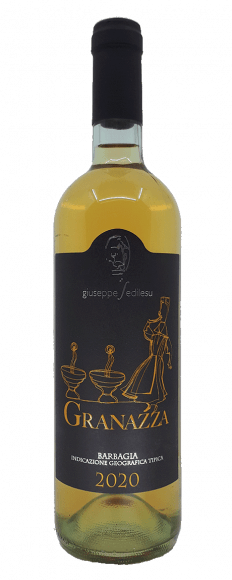
Today’s tasting note is dedicated to Granazza 2022, a highly interesting varietal white wine produced from the rediscovered indigenous grape Granatza, which is currently experiencing a small, but meaningful renaissance.
The wine is produced by Giuseppe Sedilesu, an iconic winemaker from Mamoiada, widely recognised for his role in rediscovering and promoting Sardinia’s winemaking traditions, while at the same time embracing a more contemporary, terroir-driven approach. Mamoiada itself is one of the most compelling terroirs on the island, and Sedilesu has been instrumental in bringing it to the forefront of Sardinian wine.
Granatza is a native white grape of the Nuoro area, capable of retaining notable acidity at full ripeness. Once close to extinction, with only a handful of plantings, it is now being rediscovered by a growing number of producers. The confusion with Vernaccia—due to the similarity in name—has likely contributed to its historical neglect. However, DNA analysis confirms that Granatza is an entirely distinct variety, unrelated to other Sardinian grapes.
Sedilesu was the first producer to bottle Granatza as a varietal wine, offering both a classic white version and a skin-contact (macerated) version—an approach that further highlights the grape’s versatility.
The estate is family-run and based in Mamoiada, a village of around 2,600 inhabitants, located at the foot of the Gennargentu and Supramonte mountain ranges. Over time, the winery has evolved from bulk production (pre-2000) to a focused range of high-quality wines, centred on Cannonau and Granatza. The philosophy remains rooted in respect for nature, with a clear objective: to let the territory speak through the wine.
Vineyard and Winemaking
Granazza is produced from organically farmed Granatza grapes, grown at approximately 650 metres above sea level. The vines—relatively young (5–15 years old)—are trained as bush vines (alberello) and are not irrigated, relying solely on natural water reserves in the soil.
Moderate water stress helps concentrate flavour compounds, including phenolics. Yields are kept below 60 quintals per hectare. The soils, derived from decomposed granite, contribute to the wine’s freshness, minerality and finesse, while the significant diurnal temperature variation enhances aromatic complexity.
Harvest is manual and takes place in September. In the winery, grapes are carefully sorted, destemmed and gently crushed. Both alcoholic and malolactic fermentations occur spontaneously, driven by indigenous yeasts, in stainless steel at controlled temperatures. The wine then matures in stainless steel for eight months, followed by bottle ageing.
Tasting Profile
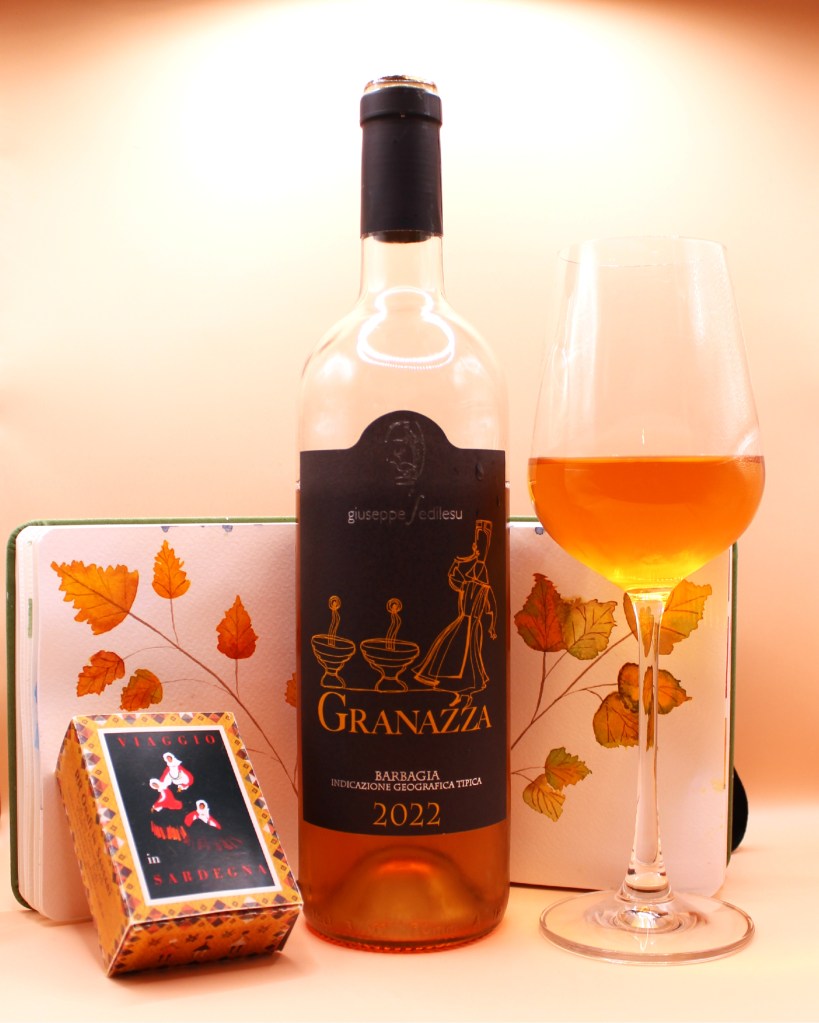
- Appearance: Medium gold—approaching old gold in tone—almost suggesting an orange wine, despite the absence of skin maceration.
- Nose: High aromatic intensity with remarkable complexity. Aromas include pear, cooked apple, orange and cedar peel, Mediterranean herbs, rockrose, hay, bread dough, ginger, forest floor and hints of candied fruit (pineapple).
- Palate: Dry, with medium(+) acidity and 13% alcohol, offering excellent balance. Medium-bodied, with an intriguing contrast between the wine’s aromatic roundness and its precise, almost nervy texture, supported by fresh acidity. Flavours mirror the nose, with a subtle oxidative nuance adding further depth.
- Finish: Medium(+), clean and persistent, with a delicate saline and mineral edge enhancing both structure and complexity.
Final Thoughts
Granazza is a true revelation. It offers a distinctive interpretation of Sardinian white wine, built on a lesser-known variety capable of delivering both character and originality.
Despite its ripe and rounded aromatic profile, the wine reveals an unexpected tension and elegance on the palate. This contrast is particularly compelling: it enhances complexity, preserves freshness, and highlights the distinctive identity of the Mamoiada terroir.
The wine is highly enjoyable in its youth but also shows potential for short- to medium-term ageing. It is likely to reach its peak around 4–5 years after bottling, when tertiary complexity and freshness find optimal balance.
While the producer recommends serving at 10–12°C, a slightly cooler temperature (6–8°C) can further emphasise the contrast between the expressive nose and the more structured palate.
Food Pairing
Granazza is versatile at the table. It works well as an apéritif, paired with Marcona almonds or Kalamata olives, but also shines with more structured dishes. Particularly successful pairings include:
- Mushroom and Parmigiano risotto (umami-rich dishes)
- Soft, creamy blue cheeses (e.g. Gorgonzola Dolce, Bleu de Bresse, Fourme d’Ambert)


Leave a Reply