Today’s tasting note is dedicated to Pedraia, a varietal Nuragus produced by Cantina di Santadi, in the Sulcis region of south-west Sardinia. It is one of the wines that best demonstrates how this historic Sardinian grape can be interpreted in a modern, terroir-driven style.
Nuragus is one of Sardinia’s oldest indigenous white grape varieties and is mainly cultivated in the southern and central parts of the island. For much of the twentieth century it was the island’s workhorse white variety, appreciated for its vigour, productivity and resistance to disease. As Sardinian viticulture gradually shifted its focus from quantity to quality, however, its popularity declined sharply. Today, plantings cover roughly one-third of the surface devoted to Vermentino, now Sardinia’s flagship white grape.
Yet producers such as Cantina di Santadi have demonstrated that, when yields are carefully controlled and the grapes are harvested at full phenolic ripeness, Nuragus is capable of producing wines of remarkable finesse. Rather than being neutral, it reveals delicate floral aromas, vibrant freshness and, above all, a distinctive phenolic texture that gives the wines both character and gastronomic appeal. Founded in 1960, Cantina di Santadi has become one of Sardinia’s benchmark co-operative wineries. While internationally renowned for its outstanding Carignano del Sulcis, developed in close collaboration with the legendary oenologist Giacomo Tachis, the estate has also played a pioneering role in showcasing the potential of several other indigenous varieties, including Nuragus. Its vineyards, many of them planted on sandy soils that have never been affected by phylloxera, remain largely ungrafted, an increasingly rare feature in European viticulture.
Vineyard and Winemaking
Pedraia is produced exclusively from Nuragus grapes grown on carefully selected vineyards in the rolling hills of the Lower Sulcis, where sandy-clay soils provide excellent drainage while retaining sufficient water during the growing season.
Naturally vigorous and relatively late ripening, Nuragus is typically among the last white varieties to be harvested, usually during the first half of October, allowing the grapes to reach full aromatic and phenolic maturity.
Following harvest, the grapes are gently pressed and vinified as a white wine using only the finest free-run juice, limiting the extraction of the more astringent phenolic compounds that historically characterised many traditional Nuragus wines. Alcoholic fermentation takes place in temperature-controlled stainless steel tanks.
After fermentation, the wine spends several months in concrete tanks on its fine lees before a short period of bottle ageing. The use of concrete helps preserve freshness while allowing the wine to gain additional texture and complexity.
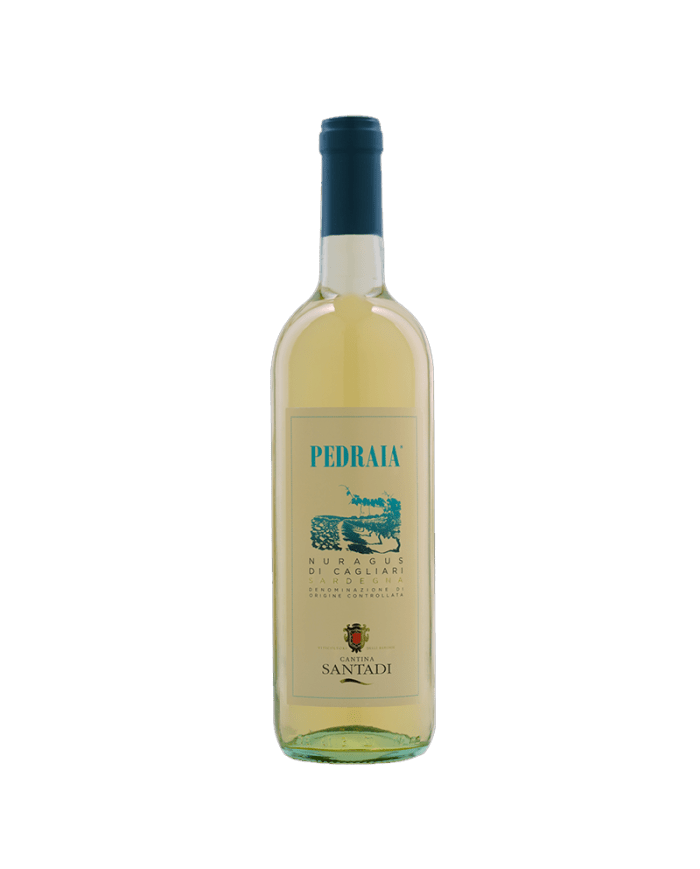
Tasting Profile
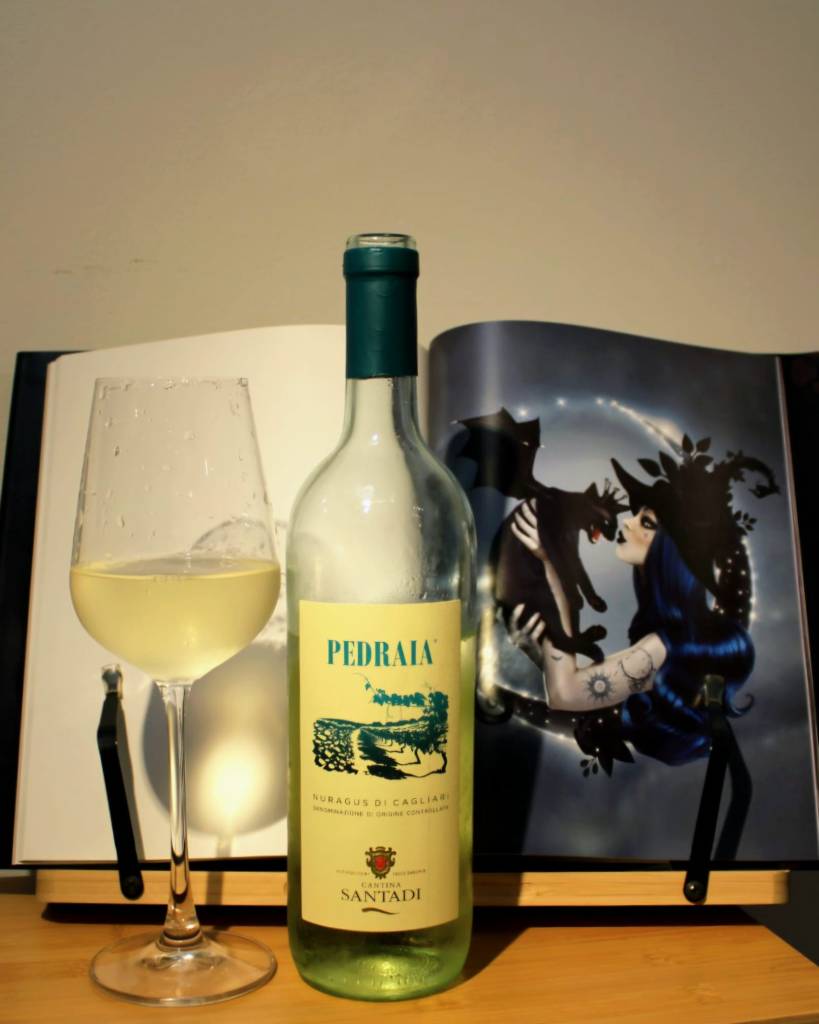
- Appearance: Pale lemon.
- Nose: Medium(+) intensity, showing elegant aromas of blossom, Scotch broom, lemon, yellow apple, pear, white melon, ripe pineapple, hazelnut, eucalyptus, wet stones, yoghurt and a delicate savoury note reminiscent of aged cheese and briny olives, adding further complexity.
- Palate: Dry, with medium(+) acidity, 12.5% alcohol and a medium body. The palate initially feels soft and almost creamy before revealing a subtle mineral and saline grip, one of the hallmark characteristics of well-made Nuragus. Flavours mirror the nose closely, while a delicate bitter note reminiscent of strawberry tree honey lingers on the finish, adding depth and typicity.
- Finish: Medium in length, fresh, precise and persistent, with a pleasant mineral and slightly bitter aftertaste that encourages another sip.
Final Thoughts
Pedraia is an elegant interpretation of Nuragus, demonstrating how this often-overlooked grape can produce wines of genuine character when carefully managed in both vineyard and cellar.
Its aromatic profile remains refined rather than exuberant, yet its true personality lies in the palate, where freshness is beautifully complemented by a subtle phenolic grip, saline minerality and the delicate bitterness that makes Nuragus unlike any other Sardinian white variety.
Compared with T’Amo, another varietal Nuragus previously reviewed on the blog, Pedraia adopts a slightly more serious and gastronomic style. It is less immediately approachable, but rewards attention with greater structure and complexity.
Although some of the finest Nuragus wines may surprise with their ageing potential, Pedraia is best enjoyed within the first few years after bottling, while its floral and fruit-driven aromas remain at their most expressive.
Serve well chilled, ideally between 6–8 °C.
As an aperitif it is wonderfully refreshing, particularly on a warm Mediterranean afternoon. At the table, however, it truly comes into its own. Its freshness, saline character and delicate bitterness make it an excellent partner for spaghetti with bottarga, spaghetti with prawns and courgettes, grilled seafood or simply fresh oysters, where the wine’s mineral profile beautifully echoes the flavours of the sea.


Leave a Reply