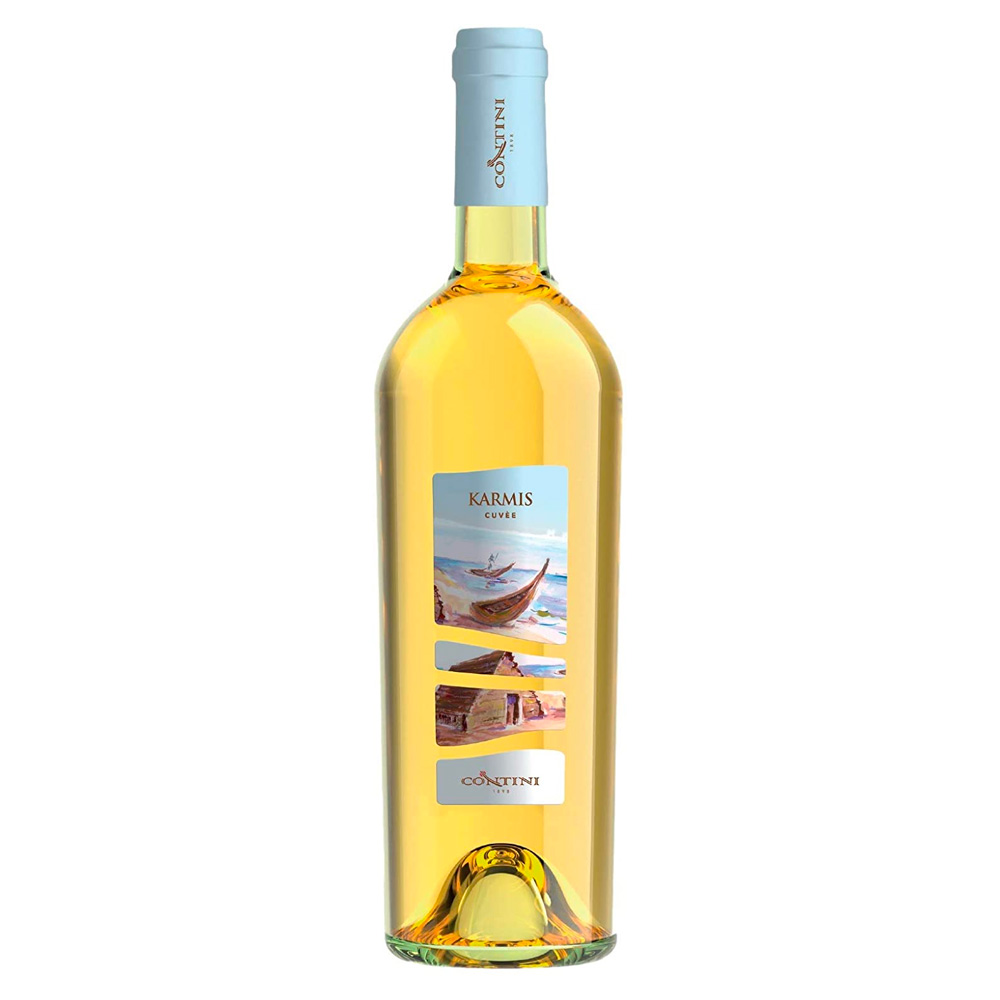
Today’s tasting note is dedicated to Karmis, one of the flagship labels of Cantina Contini and one of Sardinia’s most recognisable modern white wines. Produced from a blend of Vernaccia and a small proportion of Vermentino, Karmis is a wine that combines generosity and approachability with a distinctive sense of place.
For many wine lovers, Vernaccia di Oristano is associated almost exclusively with oxidative wines aged under flor. Karmis reminds us that the variety is equally capable of producing elegant dry whites, where its naturally broad texture and subtle savoury bitterness are beautifully complemented by the freshness and aromatic lift of Vermentino.
Compared with I Giganti Bianco, previously reviewed on this blog, Karmis adopts a fruitier and more immediately approachable style, without sacrificing complexity or identity.
Cantina Contini is the oldest privately owned winery in Sardinia still in operation, having been founded in 1898. Based in Cabras, in central-west Sardinia, its historic vineyards stretch between the Sinis Peninsula and the Lower Tirso Valley. Although internationally renowned for its extraordinary Vernaccia di Oristano—with Antico Gregori rightly considered one of Italy’s great oxidative wines—the estate has always been deeply committed to preserving Sardinia’s remarkable ampelographic heritage, working with varieties such as Nieddera, Caddiu and Muristellu. Alongside this respect for tradition, Contini has also embraced a more contemporary style of winemaking. Karmis, which celebrates its 30th anniversary this year, perfectly embodies this philosophy, successfully combining tradition with a modern and highly appealing expression.
Vineyard and Winemaking
Karmis is produced from a carefully balanced blend of approximately 80% Vernaccia and 20% Vermentino.
The Vernaccia vineyards are located on the Sinis Peninsula, where both young and old bush vines grow on sandy-clay alluvial soils formed over centuries by the flooding of the Tirso River. These soils are naturally rich in mineral salts thanks to the constant influence of the nearby sea and are predominantly alkaline.
The Vermentino, on the other hand, is sourced from vineyards planted on the gentle slopes of Monte Arci, where volcanic soils rich in obsidian provide freshness and distinctive minerality. In both cases, yields remain relatively moderate, generally below 70–80 quintals per hectare.
The grapes are harvested relatively early in order to preserve acidity. After gentle pressing, only the finest free-run juice is fermented in temperature-controlled stainless steel tanks using selected yeasts chosen to enhance the varieties’ aromatic purity. Following fermentation, the wine remains on its fine lees in stainless steel, with regular bâtonnage, adding texture, complexity and depth without compromising freshness.
Tasting Profile
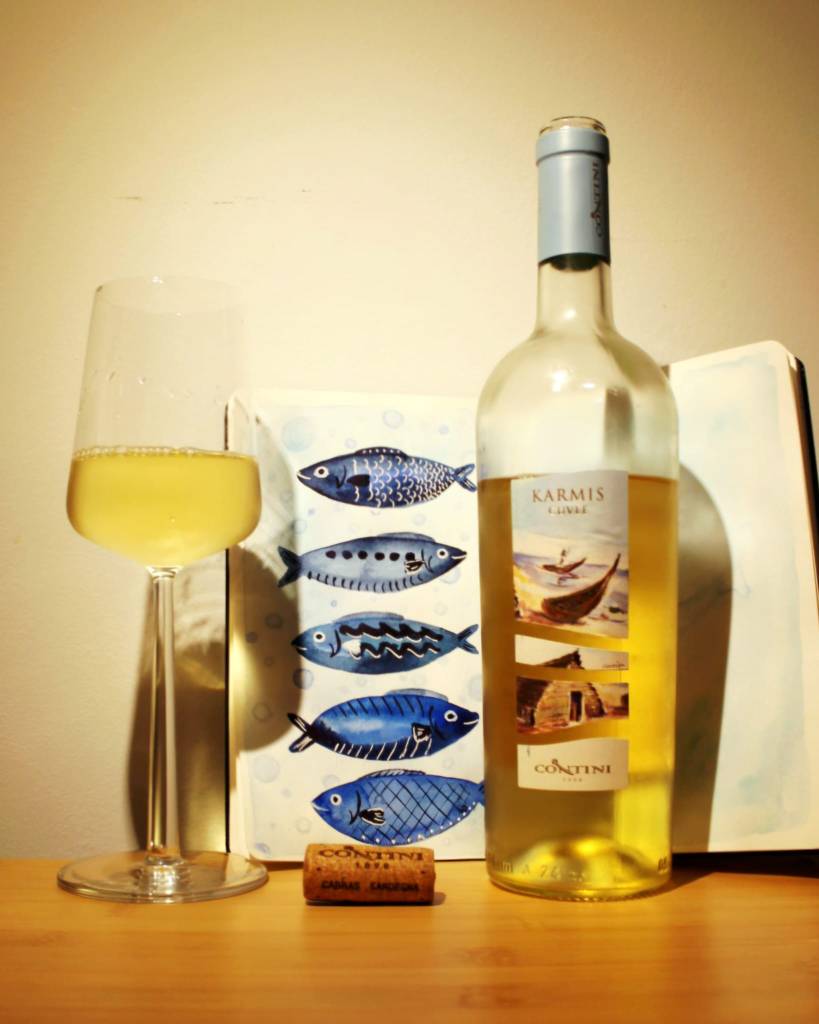
- Appearance: Pale lemon with delicate golden reflections.
- Nose: High aromatic intensity, offering expressive notes of orange blossom, Scotch broom, grape, melon, ripe pineapple, candied pineapple, banana, honey, mint, almond paste, together with intriguing savoury nuances of olive brine and capers, aromas that beautifully evoke the coastal landscape of western Sardinia.
- Palate: Dry, despite a very slight touch of residual sugar that contributes to the wine’s roundness without compromising freshness. The wine has medium acidity, 13% alcohol and a full body, creating a generous yet balanced palate. The flavours closely mirror the nose, while a distinct saline note and a delicate bitter almond finish provide freshness and structure. The subtle residual sugar integrates seamlessly with the wine’s savoury and bitter profile, enhancing rather than masking its complexity.
- Finish: Medium in length, fresh and satisfying, with the characteristic saline and almond-like bitterness lingering pleasantly on the palate.
Final Thoughts
There is a reason why Karmis has become one of Sardinia’s most recognisable white wines. It strikes a remarkably convincing balance between generosity and freshness, richness and drinkability.
The secret lies in the complementary nature of its two grape varieties. Vernaccia contributes body, texture and aromatic richness, while Vermentino brings freshness, elegance and aromatic precision. The result is a wine that feels immediately welcoming yet remains unmistakably Sardinian in character.
Although its fruit-driven profile makes it particularly enjoyable in its youth, Karmis is far from a simple wine. Its saline character, subtle bitterness and layered aromatic profile continue to unfold throughout the tasting, making each sip more engaging than the previous one.
Serve well chilled, ideally at around 6 °C. Despite its concentration, the low serving temperature preserves its freshness without muting its expressive bouquet. As an aperitif, Karmis is immensely satisfying. At the table, however, it truly shines. Its soft texture and saline finish make it an excellent companion for blue cheeses such as Blue Stilton, as well as savoury delicacies like Cantabrian anchovies. The slight hint of residual sugar also allows it to pair beautifully with raw prawns, shellfish and even a refreshing fruit salad, where its aromatic richness and freshness find a harmonious balance.


Leave a Reply