Today’s tasting note is dedicated to Arrùi, a varietal red wine made primarily from Carignano (Carignan) by The Blossom Avenue Living Farm, a small and relatively young estate in Domus de Maria, between Cagliari and Teulada in southwestern Sardinia. Located in the broader Sulcis area, one of the world’s most distinctive regions for Carignano, the estate offers its own interpretation of this emblematic Sardinian variety.
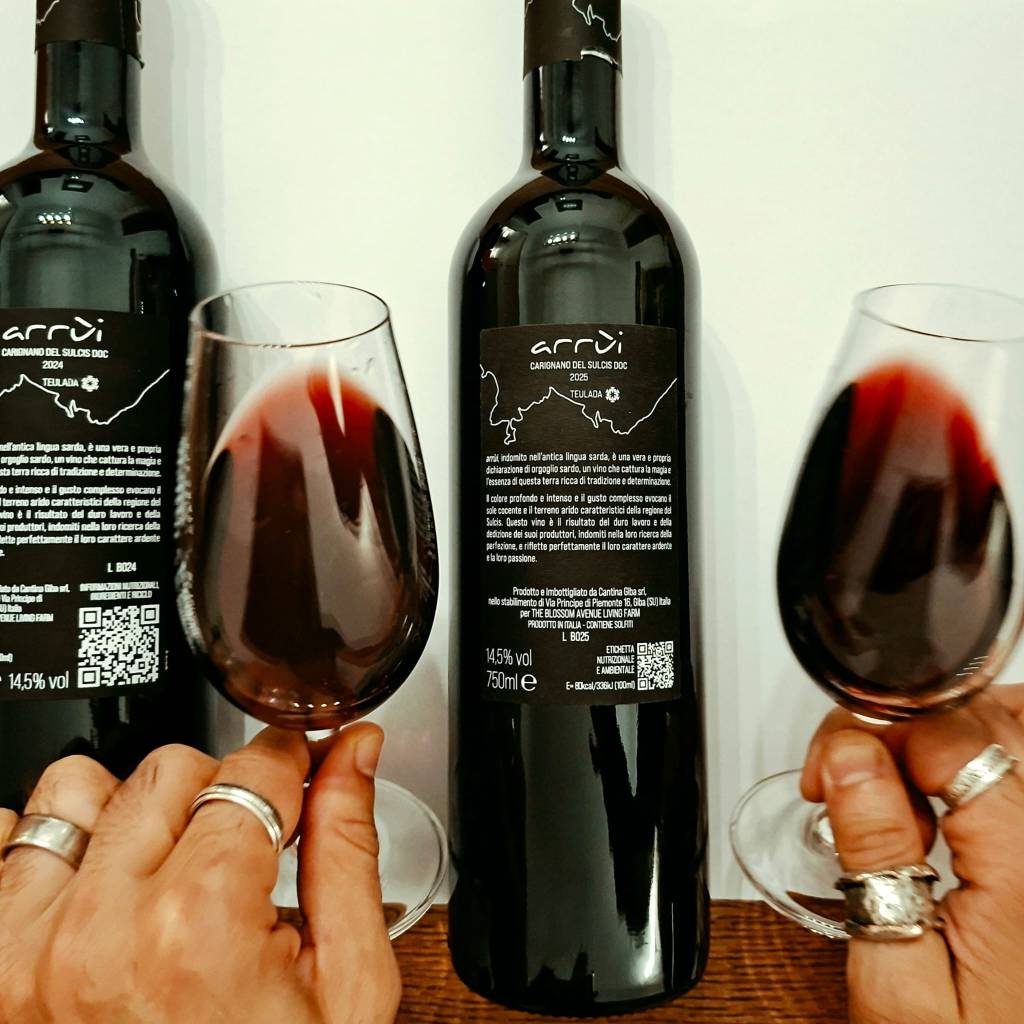
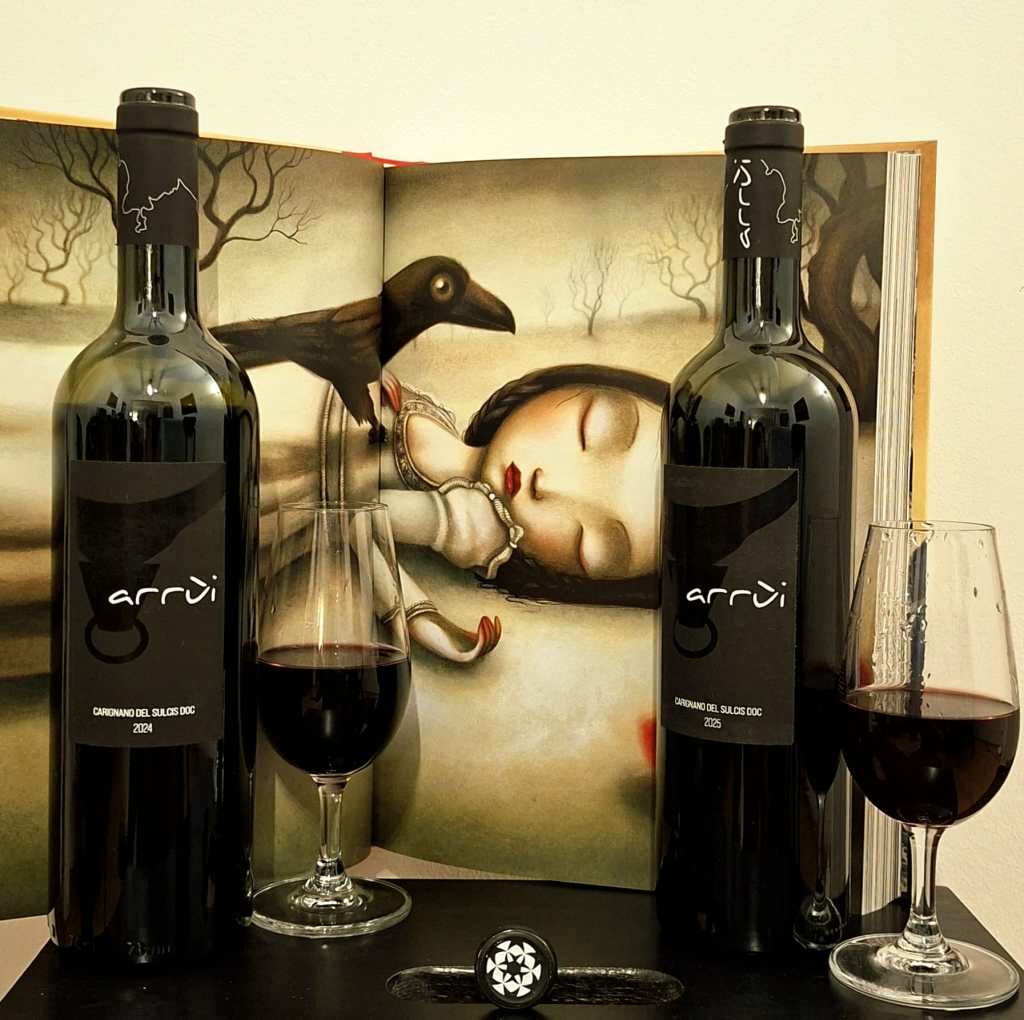
What makes today’s tasting particularly interesting is that I am comparing two vintages of the same wine, 2024 and 2025. This provides an opportunity not only to explore how the same grape and vineyard respond to vintage variation, but also to gain a better understanding of the winemaker’s interpretation of Carignano.
The Blossom Avenue Living Farm is part of The Blossom Avenue, a company specialising in architecture, urban planning and regeneration. The Living Farm project was established more than ten years ago in Sardinia, with the aim of preserving the authenticity of traditional farming methods while developing a contemporary agricultural model.
The farm’s activities extend well beyond wine, encompassing the breeding of Arabian horses and Sardinian donkeys, as well as the cultivation of Sardinian saffron and other crops. For our purposes, however, the focus is on Arrùi, currently the estate’s only wine label: a varietal Carignano del Sulcis DOC. The producer describes the name arrùi as meaning “indomitable” in an ancient Sardinian language, an apt reference to the character the estate seeks to express through the wine.
Vineyard and Winemaking
Arrùi is produced in the Domus de Maria area of Sulcis, from approximately 2 hectares of estate vineyards planted at around 150–200 metres above sea level and just 4–5 kilometres from the sea, with a south-western exposure.
The soils are predominantly sandy, with the presence of rocks and volcanic minerals. The combination of altitude, exposure and proximity to the sea creates an interesting microclimatic setting within the warm Mediterranean climate of southwestern Sardinia. Coastal breezes provide ventilation and can help moderate the effects of summer heat, while the site’s elevation contributes to a degree of day-night temperature variation.
These conditions provide an interesting environment for producing a more fresh and elegant interpretation of Carignano, rather than the fuller and more concentrated style often associated with the variety in Sulcis. Sandy soils and maritime influence are important characteristics of the wider Carignano-growing landscape of the region.
While Arrùi 2024 contains a small addition of Syrah (5%) to the Carignano base, Arrùi 2025 is made from 100% Carignano, making the comparison between the two vintages even more intriguing.
The vines are trained using cordon spur pruning and are relatively young, having been planted in 2020. As the vines mature, it will be interesting to see whether greater vine age brings additional depth and complexity to the wine.
Yields are approximately 6–7 tonnes per hectare, while production remains relatively small, at around 5,000 bottles in 2024 and 7,000 bottles in 2025. The grapes are harvested in the last days of August and rapidly transported to the winery, where they undergo destemming and crushing before being fermented as a red wine. Fermentation takes place in stainless-steel tanks, with selected yeasts. After alcoholic fermentation, Arrùi matures exclusively in stainless steel. This approach allows the producer to preserve the wine’s fruited character and keep the expression of Carignano at the centre of the wine.
Tasting Profile
Arrùi 2024
- Colour: Bright deep ruby, typical of Carignano.
- Aroma: The wine shows medium(+) aromatic intensity and a distinctly fruit-forward character, with excellent purity. The bouquet opens with geranium and carnation, followed by black cherry, black plum and blackberry, alongside pomegranate and red cherry. These fruity notes are complemented by black pepper, thyme, eucalyptus and delicate dark chocolate, with additional nuances of cooked cherry, earth and wet leaves. The aromatic profile is particularly intriguing for the way its ripe fruit is balanced by herbal, earthy and mineral nuances.
- Palate: The wine is dry, with medium(+) acidity and medium(+) tannins that have a slightly stalky, nervy character. The tannins are fine-grained enough to give the wine a remarkably delicate texture, almost making it feel like a white wine disguised as a red. At the same time, the wine’s subtle minerality provides additional chewiness and substance. The 14.5% alcohol adds weight and roundness without overwhelming the wine’s freshness. The wine is medium-bodied, combining a lean, energetic structure with a certain roundness. Its medium(+) flavour intensity is particularly expressive, highlighting the fascinating balance between ripe fruit, spices, herbs and freshness.
- Finish: The finish is medium(+), with freshness and a pleasant astringency emerging towards the end. More balsamic notes linger alongside a subtle chocolatey character, giving the wine additional complexity and leaving a clean, refreshing impression.
Arrùi 2025
- Colour: Bright deep ruby, again showing the typical colour profile of Carignano.
- Aroma: The wine has medium(+) aromatic intensity and a relatively fruit-forward character. The bouquet features geranium and carnation, followed by black cherry, ripe black plum and blackberry. Compared with 2024, however, the red-fruit character is considerably more subdued. Instead, the wine shows more pronounced black pepper, Mediterranean herbs, green bell pepper, cooked cherry, leather, game and wet earth. The overall impression is therefore slightly more savoury and earthy than the 2024, with the fruit still providing a clear foundation.
- Palate: The wine is dry, with medium(+) acidity, although the acidity feels slightly lower than in 2024. The medium(+) tannins are still somewhat stalky and nervy, but feel slightly softer than in the previous vintage. They emphasise both the wine’s minerality and ripeness, creating a sip that combines roundness with elegance. At 14.5% alcohol, the wine has enough power to enhance its roundness while remaining well integrated with the fruit. The wine is medium(+)-bodied, providing greater weight and texture than in 2024. The subtle steely minerality found in the 2024 is also present here. The medium(+) flavour intensity is very expressive, showing the balance between fruit, spice and herbal notes, while the greater ripeness and savoury character give the wine a slightly more layered personality.
- Finish: The wine has a medium(+) finish, with astringency and balsamic notes combining nicely to support its chewy texture. The subtle herbal tones remain particularly prominent and linger for some time, reinforcing the wine’s complexity.
2024 vs 2025: The Beauty of Vintage Variation
In a nutshell, 2024 is slightly fresher and leaner, while 2025 comes across as slightly riper and more savoury.
The aromatic profiles of the two vintages are, unsurprisingly, very similar, but there are some fascinating differences. 2024 places greater emphasis on fruit, particularly red fruit, as well as herbal notes, while 2025 shows more pronounced savoury and spicy characteristics.
On the palate, there are again more similarities than differences. The 2025 is slightly rounder and softer, while the tannins are broadly comparable in both wines. In 2024, however, they seem to contribute more to the wine’s elegance and freshness, whereas in 2025 they appear to play a greater role in supporting its chewy texture. This is exactly what makes comparative tastings so interesting. A relatively small change in vintage can reveal different nuances while leaving the underlying identity of the wine intact. Vintage variation is often underappreciated, particularly when wines are tasted individually, so I was particularly happy to have the opportunity to explore it here.
Final Thoughts
Arrùi is an elegant yet structured and fruit-forward Carignano. Although it is made in an approachable style that makes it easy to enjoy, there is also a degree of complexity resulting from the careful handling of the grapes in the cellar.
Its fruity profile is more complex than that of many wines made in a similarly accessible style, with the ripeness of the fruit providing an important part of its character. It is also a reminder of the remarkable versatility of Carignano in Sulcis: the variety can produce wines that are ripe, concentrated and complex, while retaining a certain lightness and elegance.
Arrùi is probably a leaner expression of Carignano than some of the wines that have made Sulcis famous. Yet the two vintages demonstrate just how much nuance can emerge from this more elegant interpretation.
2024 is crunchier, fresher and nervier, with a more pronounced red-fruit character. 2025 is riper, rounder and more savoury, with greater emphasis on spicy, herbal and earthy notes. It is particularly interesting to see how these differences emerge despite the overall stylistic continuity between the two wines.
It is also remarkable to achieve this level of balance in the warm climate of Sulcis. The predominantly sandy soils, together with the site’s exposure, altitude and maritime influence, provide an interesting setting for this relatively light-footed interpretation of Carignano. Sandy soils are one of the defining characteristics of many of the region’s most distinctive Carignano vineyards.
In terms of ageing potential, I would expect Arrùi to develop positively over the medium term, with around five years of bottle age potentially representing an interesting point between youthful freshness and developing complexity. I would be comfortable keeping it for up to ten years, although the wine’s greatest appeal is arguably its combination of freshness and fruit rather than extended tertiary development.
I would serve Arrùi at around 16–18°C, avoiding higher temperatures that could make the alcohol feel more prominent. If drinking it young, it should work particularly well with Sardinian charcuterie. With some bottle age, I would move towards richer and more savoury dishes, such as roasted meats, sausages and lamb ribs. The riper and more savoury 2025 may already be particularly well suited to these pairings.
For something more adventurous, I would also try it with fresh tuna. The fresher, more fruit-driven 2024 could work particularly well with spaghetti alla carlofortina, combining tuna and pistachios, or even with a tuna tataki.
And which vintage would I choose?
For drinking now, I would probably go for the 2025, which already offers a slightly more complex and multilayered aromatic profile. But for ageing, I would be very curious to see how the more fruit-forward character of 2024 develops over the next few years. That is perhaps the most rewarding aspect of this tasting: the two bottles show the same wine speaking with two slightly different voices, reminding us that the identity of a wine is not only about the grape variety or the winemaker, but also about the particular year in which it was born.
 Sardinian Wine Stories
Leave a comment