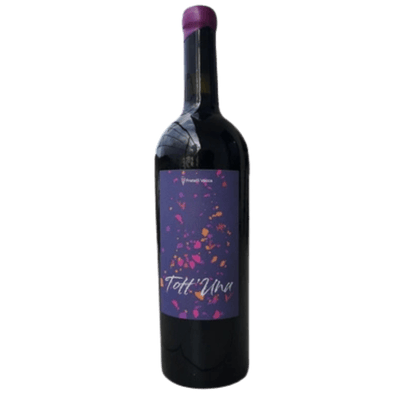
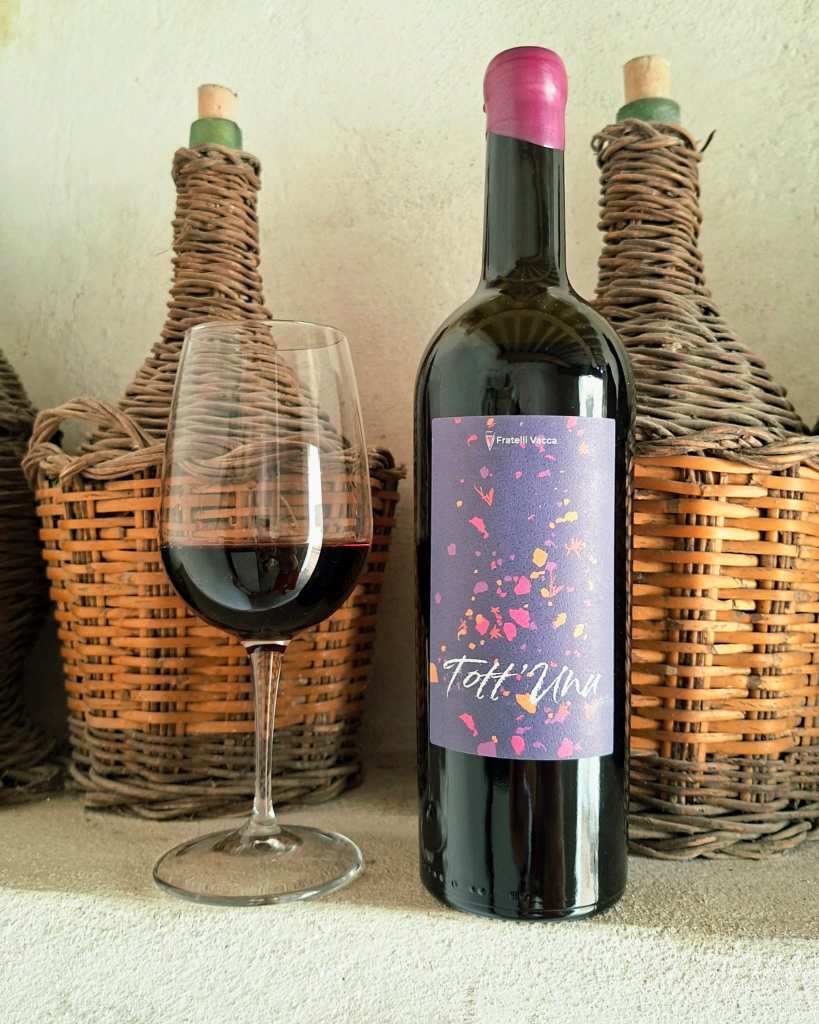
This tasting is dedicated to Tott’unu, a red blend produced by Fratelli Vacca Vitivinicola, a young and small estate based in Atzara, in the heart of the Mandrolisai region of central Sardinia.
Tott’unu represents an authentic and respectful interpretation of the ampelographic heritage of the Mandrolisai. It brings together several of the traditional grape varieties found in the area: Bovale Sardo (locally known as Muristellu), Monica, Niedda Manna and Cannonau. The result is a wine that draws on the traditional identity of the region while remaining outside the Mandrolisai DOC.
The Mandrolisai is one of Sardinia’s historic wine-growing areas, located in the mountainous interior of the island. Its vineyards occupy hilly and upland landscapes, with granite-derived soils particularly characteristic of the area. The combination of altitude, warm and dry summers and significant day-night temperature variation can favour both aromatic development and the retention of acidity in the grapes.
Fratelli Vacca Vitivinicola is a young estate established in 2021 in Atzara, in the heart of the Mandrolisai. The project was founded by siblings Jacopo and Antonella Vacca, driven by a passion for wine and for the land, with the aim of highlighting the local grape varieties and viticultural heritage of the area. The winery’s philosophy is centred on respect for the territory and local winemaking traditions, the preservation and enhancement of indigenous grape varieties, sustainable vineyard practices and a deliberately limited production. Their first wine, Tott’unu, comes from a historic vineyard that the family acquired in Atzara.
Vineyard and Winemaking
Tott’unu is produced from grapes grown in the estate’s one-hectare historic vineyard, planted in 1965 in the heart of the Mandrolisai. The vineyard is therefore almost 60 years old for this 2023 vintage and is characterised by sandy soil derived from the weathering of granite.
The vineyard is particularly valuable not only for its age but also for the traditional mix of grape varieties it preserves. Bovale Sardo, Monica, Niedda Manna and Cannonau are cultivated together, reflecting the traditional field-blend character of the Mandrolisai. The vineyard is also included in the historic vineyard register of the municipality of Atzara.
The name Tott’unu, which in Sardinian conveys the idea of being all one or together as one, evokes the harmonious union of these traditional varieties in the vineyard.
The grapes are harvested between the end of September and the first week of October, depending on ripeness. Harvesting is entirely manual, with careful selection of the best bunches from the old vines.
The grapes undergo 10–12 days of maceration with the skins, during which the cap is manually punched down every day. This traditional approach favours the extraction of colour, aroma and tannins while maintaining the character of the fruit.
The wine then spends 10 months ageing in stainless-steel tanks, allowing it to develop and stabilise while preserving the freshness and purity of its fruit profile.Tott’unu is produced in very limited quantities, with a deliberately low yield of around 20 quintals per hectare and an annual production of approximately 1,000 bottles. It is therefore very much a small-scale expression of the Mandrolisai, rooted in its traditional grape varieties and old-vine heritage.
Tasting Profile
- Colour: Bright, deep ruby, with a delicate purple rim.
- Aroma: The wine shows high aromatic intensity and considerable complexity. Floral notes of carnation are followed by red-fruit aromas of slightly underripe red plum, red cherry and redcurrant, with less prominent but clearly present black-fruit notes of blackberry and black cherry. The fruit is complemented by black pepper, Mediterranean herbs such as thyme and rosemary, tapenade, kirsch-like cherry, tobacco, sweet spices and leather. The overall impression is fresh and savoury rather than heavy, with balsamic nuances gradually emerging in the glass.
- Palate: The wine is dry, with high acidity and high tannins. The tannins are firm and slightly stalky at this stage, giving the wine a distinctly nervy and structured character. The acidity provides considerable freshness and contributes to the wine’s sense of energy, while the 14.5% alcohol brings weight and power to the palate. The wine has a very full body, with a substantial, structured and chewy texture. The high flavour intensity mirrors the aromatic profile, with the balsamic and mineral impressions becoming particularly prominent on the palate. Despite its concentration and alcohol, the wine retains a notable sense of freshness, which prevents it from feeling heavy or flabby.
- Finish: The finish is rather long, with the initial astringency gradually giving way to more balsamic and spicy notes. These are accompanied by a delicate mineral impression and, towards the very end, a subtle saline note that adds further freshness to the finish.
Final Thoughts
Tott’unu is a structured and complex wine that shows the potential of the Mandrolisai terroir through a particularly traditional combination of grape varieties. It is concentrated, full-bodied and relatively high in alcohol, yet the combination of acidity, tannins and aromatic freshness gives the wine an elegant dimension.
What I particularly enjoy is the tension between these different elements. The wine is powerful yet fresh, structured yet elegant, intense yet not heavy. Its energy comes not only from the alcohol and concentration but also from the firm acidity and tannic structure.
The blend of local grape varieties creates a particularly interesting and layered aromatic profile. This is indeed a case where the whole is greater than the sum of its parts. The combination of red and black fruit remains on the fresh side, while herbal, balsamic and spicy notes add further complexity without making the bouquet feel overly rich or sweet.
The wine’s alcohol, acidity and tannic structure suggest good ageing potential, and I would expect it to develop positively over the next decade or longer, provided it is stored appropriately. At the same time, I would not necessarily wait: the freshness of the floral and fruity aromas makes the wine very enjoyable in its youth.
For the same reason, I would recommend serving it slightly cooler than typical room temperature, around 16°C when young. As the wine develops with bottle age, the serving temperature could be raised slightly, towards 17–18°C. I would also recommend giving it some time to breathe. Around one hour in a decanter should help the wine open up and allow its balsamic, spicy and savoury nuances to emerge more clearly.
In terms of food pairing, this is a structured yet versatile wine. It would naturally work very well with complex and flavourful meat dishes such as porceddu, Sardinian roasted suckling pig, or pecora arrosto, roasted or grilled mutton. Its acidity and tannins would also make it a good partner for pasta dishes with rich, savoury sauces, particularly pappardelle with wild-boar ragù or hare ragù.
For vegetarians, I would look towards umami- and salt-rich foods, especially mature or hard Pecorino Sardo. The wine’s acidity can cut through the richness of the cheese, while its tannic structure works particularly well with its fat and savoury character. Tott’unu ultimately strikes me as a wine that manages to express something very characteristic of the Mandrolisai: old vines, traditional varieties and a naturally powerful environment, interpreted with enough freshness and restraint to keep the wine energetic and elegant. It is a small production, but one that offers a fascinating glimpse into the viticultural heritage of central Sardinia.


Leave a comment