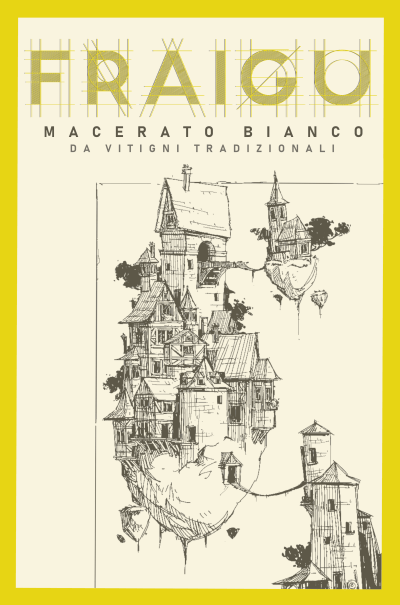
Today’s tasting note is dedicated to Fraigu, a fascinating orange wine: a white wine made with extended skin contact during fermentation. It is a blend of indigenous and traditional Sardinian white varieties, from the ubiquitous Vermentino to the much rarer Zirone a bacca bianca, produced by the small Agreste Natura estate in Sennori, in north-western Sardinia.
Agreste Natura is a family-run micro-estate that combines a philosophy of minimal intervention with a strong interest in recovering traditional agricultural practices and lesser-known Sardinian varieties. Fraigu is perhaps the clearest expression of this approach: a wine that looks towards the past while fitting naturally into the contemporary revival of orange and skin-contact wines.
The inspiration behind Fraigu comes from family memories of traditional rural winemaking. The producer recalls how the founder’s grandfather used to macerate different fruits, both white- and dark-skinned, and sought to translate this memory into a wine made using extended skin contact and lesser-known local varieties. The result is a fascinating bridge between traditional Sardinian practices and the modern renaissance of orange wine.
Agreste Natura is based in Sennori, in the heart of the Romangia region. The estate covers around seven hectares, including vineyards, olive groves and orchards, and follows a philosophy of minimal intervention in both the vineyard and cellar. Its wines aim to express the character of north-western Sardinia while also contributing to the preservation of lesser-known local agricultural varieties.
Vineyard and Winemaking
Fraigu is produced from a blend of 75% Vermentino, 15% Moscato and 10% Zirone a bacca bianca.
The vineyard is located in the evocatively named Badde Margherida, in the Spiana del Silis, at just 88 metres above sea level. The vines were planted in 1985 and are trained using Guyot on trellis, with the rows oriented south-east and a north-west exposure. The vineyard is non-irrigated, produces approximately 40 quintals per hectare, and is planted on calcareous soils.
These are particularly interesting conditions for a wine based on extended skin contact. The relatively low elevation and calcareous soils place the vineyard firmly within the agricultural landscape of the Romangia, while the use of old vines and limited yields provides a strong foundation for the concentration required by this style of winemaking.
The winemaking follows techniques inspired by traditional rural practices, with the white grapes undergoing a long fermentation on their skins. Fermentation takes place at 25–28°C and lasts for approximately 12 days, with manual punch-downs and open-air pump-overs helping to control the extraction of colour, tannins and flavour compounds from the skins.
Alcoholic fermentation is spontaneous, relying on naturally occurring yeasts rather than inoculated commercial yeast. The wine is then racked at 0° Babo and aged in stainless steel, allowing the aromatic and textural characteristics created during skin maceration to remain at the centre of the wine.
The Zirone a bacca bianca is particularly interesting. Rather than coming exclusively from the estate’s own vineyards, these grapes are sourced from older local growers who continue to cultivate this traditional Sardinian variety. Agreste Natura’s search for these lesser-known grapes is part of its broader effort to preserve local agricultural biodiversity and keep varieties at risk of disappearing in cultivation.
Production is extremely limited, at just around 1,200 bottles.
Tasting Profile
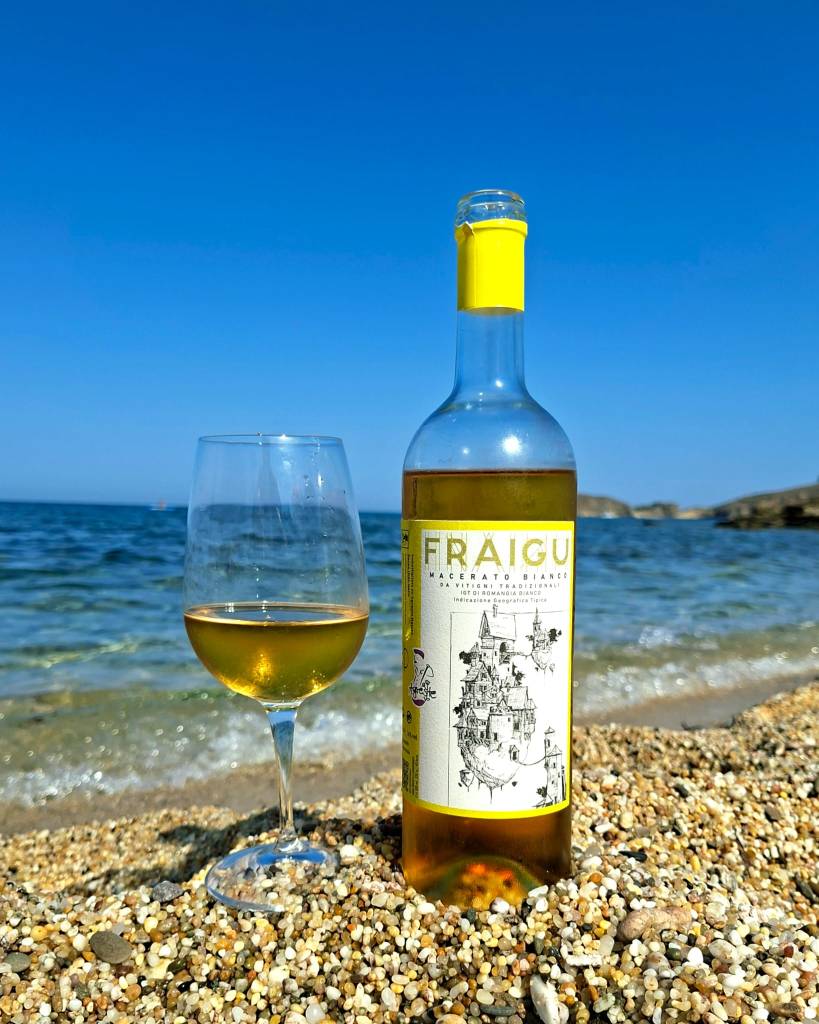
- Appearance: Medium gold, approaching old gold (vieil or, as the French would describe it). Despite its extended skin contact, the colour is relatively light for an orange wine, giving it a particularly elegant appearance.
- Nose: This is a wine with high aromatic intensity and remarkable complexity. The bouquet opens with grape and pear, followed by cooked apple, orange and cedar peel. There are also pronounced Mediterranean herbs and hay, alongside more unusual nuances of bread dough, cream and milk chocolate. As the wine opens, the aromatic profile becomes increasingly layered, revealing ginger, almond paste, amaretto and candied fruit, including hints reminiscent of candied pineapple. What makes the nose particularly fascinating is the way its fresh fruit character interacts with the more mature, savoury and sweet-spiced aromas created by the extended skin contact and ageing. It is an unusually complex aromatic profile for a wine that remains remarkably approachable.
- Palate: The wine is dry, although there is a slight perception of sweetness that adds roundness to the palate. It has medium(+) acidity and 14% alcohol, creating a remarkably balanced combination of freshness, weight and warmth. The wine is full-bodied, with a relatively round texture, but it retains enough freshness and structure to prevent it from feeling heavy. The skin maceration has contributed fine-grained, delicate tannins that are light but persistent, adding both texture and complexity without compromising drinkability. On the palate, many of the aromas found on the nose return, particularly the cooked fruit, sweet spices and almond character. There is also a distinctive, delicate oxidative nuance, which adds another layer to the wine without dominating its overall profile. The result is a wine that occupies an interesting space between the aromatic richness of a mature white wine and the textural structure normally associated with red wine.
- Finish: The medium(+) finish is particularly persistent, with lingering notes of sweet spices and almond paste. These are complemented by a delicate touch of salinity and minerality, which refresh the palate and contribute further complexity.
Final Thoughts
Fraigu is a true surprise.
It offers the opportunity to taste a Sardinian orange wine — a style that remains relatively young in its contemporary development on the island — while also highlighting the potential of skin-contact winemaking with local Sardinian varieties.
What makes Fraigu particularly intriguing is that it is not simply an orange wine made from a familiar variety. The combination of Vermentino, Moscato and the much rarer Zirone a bacca bianca creates an unusually distinctive aromatic profile.
The delicate grapey character of Moscato combines with the almond and dried-fruit nuances associated with the wine’s evolution, while the skin contact contributes fine tannins and additional structure. A subtle perception of sweetness further softens the tannins and creates an unusual textural balance.
The wine’s high aromatic intensity also makes it particularly rewarding to taste slowly. New layers emerge as the wine opens in the glass, moving from fruit and herbs towards spices, almond, pastry and more savoury nuances.
This is a wine that can be enjoyed young, when its aromatic richness and freshness are at their most immediate, but I would also be curious to follow its development with bottle age. Based on its structure, I would expect it to become particularly interesting after several years, as the primary fruit gradually gives way to more developed tertiary aromas.
I would not be surprised if the wine could evolve positively for up to ten years, although this is an experiment I would particularly enjoy conducting rather than a prediction I would regard as certain.
The producer recommends serving Fraigu at around 10–12°C, and I would follow that recommendation. Given the wine’s aromatic complexity and textural structure, I would avoid serving it too cold, allowing it to warm gradually in the glass so that its full aromatic range can emerge.
In terms of food pairing, this is definitely a wine for the table.
I would particularly enjoy it with seafood, such as grilled prawns or grilled cuttlefish. Its acidity and tannic structure should also work particularly well with fattier fish, such as grilled mackerel or grey mullet, where the freshness can cut through the oily texture while the tannins provide additional grip.
Another particularly appealing combination would be medium-aged or mature Sardinian Pecorino. The wine’s structure, acidity and subtle perception of sweetness should provide an interesting counterpoint to the cheese’s richness, saltiness and protein.
Fraigu demonstrates how the revival of traditional techniques can produce something that feels both deeply connected to Sardinian agricultural heritage and distinctly contemporary. It is also a reminder that the island’s wine identity is much broader than its better-known varieties and styles. With wines such as Fraigu, lesser-known grapes like Zirone can find a new role in the modern Sardinian wine landscape.


Leave a comment