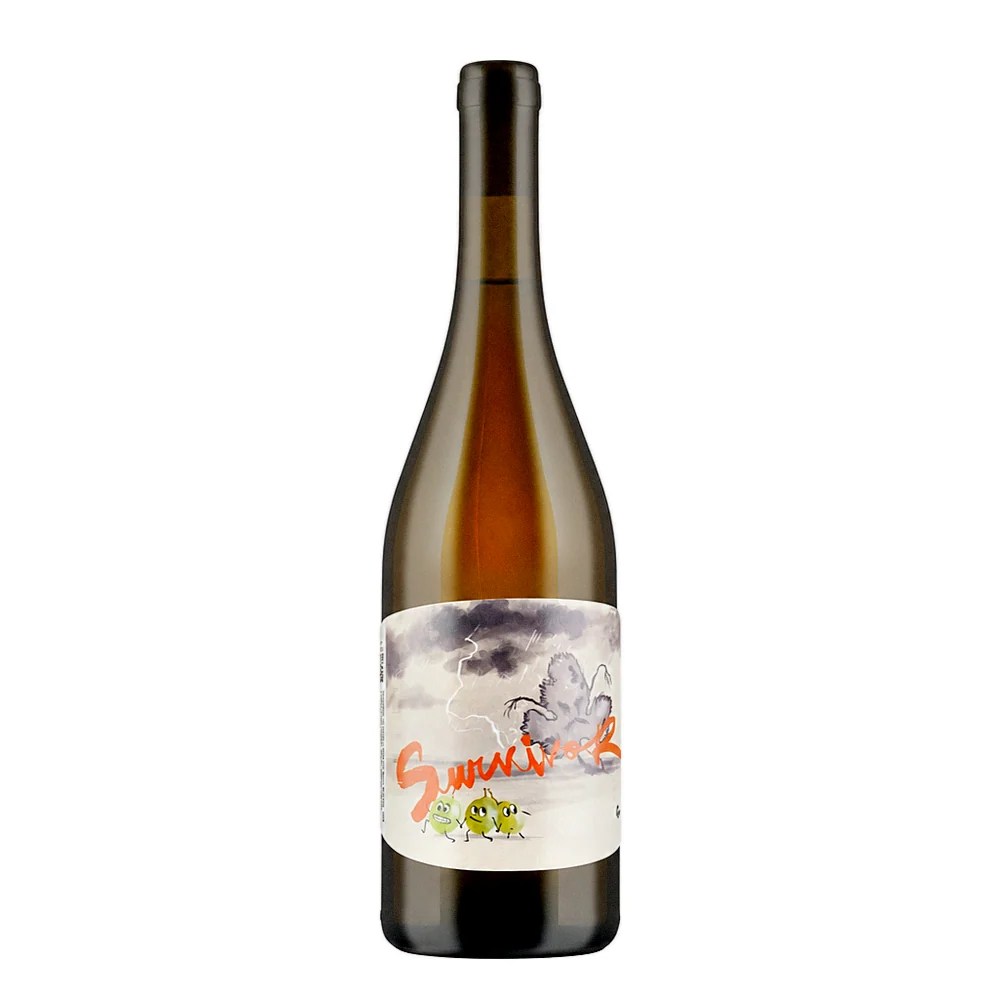
Today’s tasting note is dedicated to Survivor Bianco, a very interesting orange wine: a white wine made with extended skin contact during fermentation. I had the opportunity to taste it during my recent trip to Taiwan, at the great Tik & Sip Wine Bar in Taipei (no distance is too far for a good bottle of wine!). It is produced by the legendary Azienda Agricola PaneVino, owned and run by Gianfranco Manca, an (almost esoteric) icon of low-intervention wine in Sardinia and beyond.
PaneVino is a small estate based in Nurri, in inland southern Sardinia. The estate has about six hectares under vine, where more than thirty grape varieties are grown. Manca follows strict natural principles that he considers beyond biodynamics: no herbicides, pesticides or systemic treatments are used in the vineyards — only minimal copper when absolutely necessary. Every year the wines change label, because each one has a different story to tell, and the labels are often painted by Gianfranco’s son. Total production is approximately 15,000 to 20,000 bottles.
Survivor Bianco is one of three wines in the series, alongside a red and a rosé. The Survivor wines are produced only in vintages marked by extreme weather, and in this sense they represent the ultimate expression of Manca’s zero-intervention approach to farming and winemaking. The series was born out of brutal vintages, most notably 2023, which brought a destructive mix of climate hazards. As these conditions nearly wiped out his harvest, rather than trying to rescue individual single-vineyard or varietal wines, Manca dropped all the usual cuvée names. He blended what had survived the chaotic season and bottled it under a single name: “Survivor”. In his view, the wine stands as proof that natural instability is a form of living energy, not a flaw.
Vineyard and Winemaking
PaneVino’s vineyards sit at roughly 700 metres above sea level, on five different parcels with diverse soils, including schist, decomposed schist, iron-rich clay, limestone, quartz and sand. The vines are trained in the traditional alberello (goblet) system, and the vineyards include over 30 indigenous varieties, some of which had nearly disappeared from Sardinian viticulture.
Survivor Bianco is a co-fermented field blend of indigenous Sardinian white varieties harvested from the estate parcels. The main varieties are Vermentino, Vernaccia, Nasco and Malvasia, with minor contributions from other Sardinian varieties (Nuragus, Semidano, Retallada, Tzaccaredda and Moscato). All the grapes are harvested and fermented together, from what managed to survive the vintage. The grapes undergo an extended fermentation on their skins (typically around four weeks) in open-top wooden vats, using only indigenous yeasts. This gives the wine a striking hazy amber-gold colour and a structured tannic profile. The wine is then aged for roughly 12 months in older, neutral oak or acacia barrels, and bottled unfiltered, unfined and with no added sulphites (SO₂).
Tasting Profile
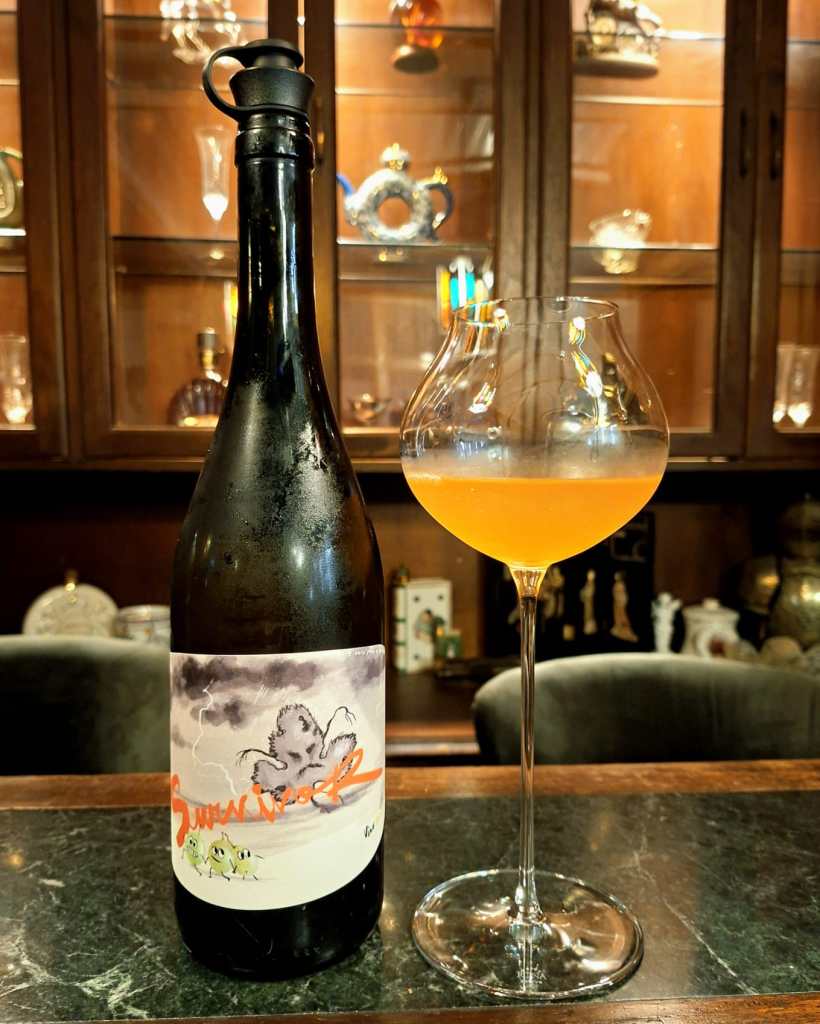
- Appearance: Hazy medium amber-gold with copper reflections.
- Nose: This is a wine with high aromatic intensity and remarkable complexity. The bouquet opens with orange blossom and verbena, followed by orange peel, apricot and peach, with a distinctive grapey note. There are also grassy and mint notes, hay and musk. Secondary aromas of yeast and bread crust are joined by more developed notes of dried apricot, candied ginger and caramelised sugar cane.
- Palate: The wine is dry, with high acidity and high (15%) alcohol. There is a very subtle pétillance and a gentle touch of low, silky but delicately persistent tannins from the skin maceration. The body is medium(+) and the balance is excellent: the high alcohol and the delicate astringency are complemented by the freshness and vibrancy of the acidity and the pétillance, adding complexity and structure without making the wine less drinkable. Many of the aromas from the nose return on the palate, with a distinctive yet delicate note of white pepper, almond and hazelnut. The texture remains delicate, fresh and elegant.
- Finish: The long finish shows remarkable persistence, with aromas that linger beautifully, complemented by a delicate touch of salinity and minerality. The acidity, the delicate bitterness and the tannins all contribute to the wine’s persistence.
Final Thoughts
Survivor is a true masterpiece.
It is a wine that any connoisseur would recognise as truly fine. It offers the opportunity to taste a Sardinian orange wine — a style that is still in its infancy on the island — and highlights the great potential of this style in Sardinia. It is also quite peculiar even among orange wines: its production philosophy lets the terroir, the grapes and the vintage express themselves to the maximum, creating an almost unique combination of features.
What impresses most is the balance. Despite its high alcohol and medium(+) body, Survivor comes across as fresh and vibrant, with the alcohol blending finely into the acidity and a high concentration of aromas of remarkable complexity, spanning from floral to herbaceous notes, with interesting secondary yeasty aromas and tertiary, mildly oxidative notes. Its freshness and elegance, combined with that concentration, put it among the wines that deserve the very best occasions and offer an almost infinite range of pairing possibilities.
The wine’s typicity is also highlighted by the complex field blend: the subtle aromas of almond, musk and grapes hint at the different roles played by the many indigenous varieties that go into the bottle.
This is a wine that is perfectly enjoyed young, when its freshness is at its maximum. It could moderately improve with a few years in bottle (no more than five), gaining a little more complexity and more prominent tertiary aromas. However, as a living wine — with no added sulphites, among other things — there is a risk that it may not evolve beautifully, or that it may evolve faster than expected. The safest bet is therefore to enjoy it young, even if I tasted it when it was already three years old…
In terms of serving temperature, I think the best option to emphasise the elegance of Survivor would be to serve it quite cool, around 8–10°C, to bring the contrast between nose and palate to its optimum. However, a slightly higher serving temperature would let some phenolic notes come out with more prominence, offering a slightly different approach to the wine’s overall aromatic profile.
In terms of food pairing, this time I will go a bit off the beaten track, also in honour of the discussions I had in Taiwan about the ideal pairings for Survivor. My Taiwanese friends pointed out that the aromatic profile of Survivor, where savoury aromas meet sweet spices, suggests a number of good pairings with Taiwanese dishes, while its freshness can cut through the relatively sweet fat of some of them. Perfect pairings could be San Bei Ji (three-cup chicken), Ló͘-bah-pn̄g (minced pork rice), salt-and-pepper squid and prawns, and oyster omelette.
I would also propose a pairing from the Mediterranean, closer to Sardinia, this time exploring Lebanese cuisine. The freshness of the wine would cut through the oiliness and spice of perfectly fried falafel, while its herbaceous notes would pair well with an accompanying tabbouleh. Survivor is a reminder that even a brutal vintage can become a wine of real identity.


Leave a Reply