As the summer season approaches, today’s tasting note is dedicated to Gran Rosé, a biodynamic rosé produced by Tenuta Masone Mannu, a renowned estate based in Monti, in the inland heart of Gallura (north-eastern Sardinia). While both the area and the estate are particularly well known for their crisp and mineral Vermentino di Gallura, Monti is increasingly revealing a remarkable potential for high-quality wines across different styles, as demonstrated by this excellent varietal Cannonau rosé.
Rosé wines are enjoying growing popularity worldwide, and Sardinia is no exception. An increasing number of producers are experimenting with different styles of rosé, often with impressive results. At the same time, some estates are increasingly exploring organic and biodynamic approaches to viticulture, taking advantage of Sardinia’s favourable climate and relatively low disease pressure.
Gran Rosé fits perfectly within these trends. It is an approachable rosé with moderate alcohol (12.5%), remarkable freshness, and an expressive fruit-forward character. A versatile wine, ideal for warm-weather drinking, while still retaining enough structure and personality to stand out from the crowd.
Tenuta Masone Mannu, which today comprises around 40 hectares of vineyards, is progressively converting its production to biodynamic viticulture. Whatever one’s views on biodynamics (I am all in, to be fully transparent), Sardinia offers particularly favourable conditions for low-intervention vineyard management thanks to its sunny and windy climate. In this respect, Masone Mannu is among the producers exploring alternative approaches to viticulture while maintaining a strong focus on quality.
Vineyard and Winemaking
Gran Rosé is produced from Cannonau grapes grown in the estate’s vineyards in the locality of Su Canale, near Monti, at an altitude of approximately 120 metres above sea level. The vines, around twelve years old, are exposed to the south-east and yield approximately fifty quintals per hectare.
Cannonau (Grenache) is traditionally one of the preferred grape varieties for rosé production throughout the Mediterranean, particularly in Spain and southern France. Gran Rosé demonstrates that Sardinia can produce equally compelling rosés from this versatile variety.
The terroir of Monti is particularly well suited to the production of white and rosé wines. The soils are predominantly decomposed granite sands, which contribute freshness, minerality, and finesse. Equally important are the significant diurnal temperature variations, which help preserve aromatic intensity and freshness during ripening.
Although Cannonau is a late-ripening variety, the grapes destined for Gran Rosé are harvested relatively early, during the first half of September. This preserves acidity, moderates alcohol levels, and helps maintain the vibrant fruit profile that defines the wine. Harvesting and grape selection are carried out entirely by hand.
In the cellar, the grapes undergo destemming and crushing before a short maceration of approximately ten hours to achieve the desired colour extraction. The free-run juice is then gently pressed and fermented spontaneously in stainless steel tanks.
Following fermentation, Gran Rosé matures in stainless steel for five to six months before a brief bottle ageing period prior to release.
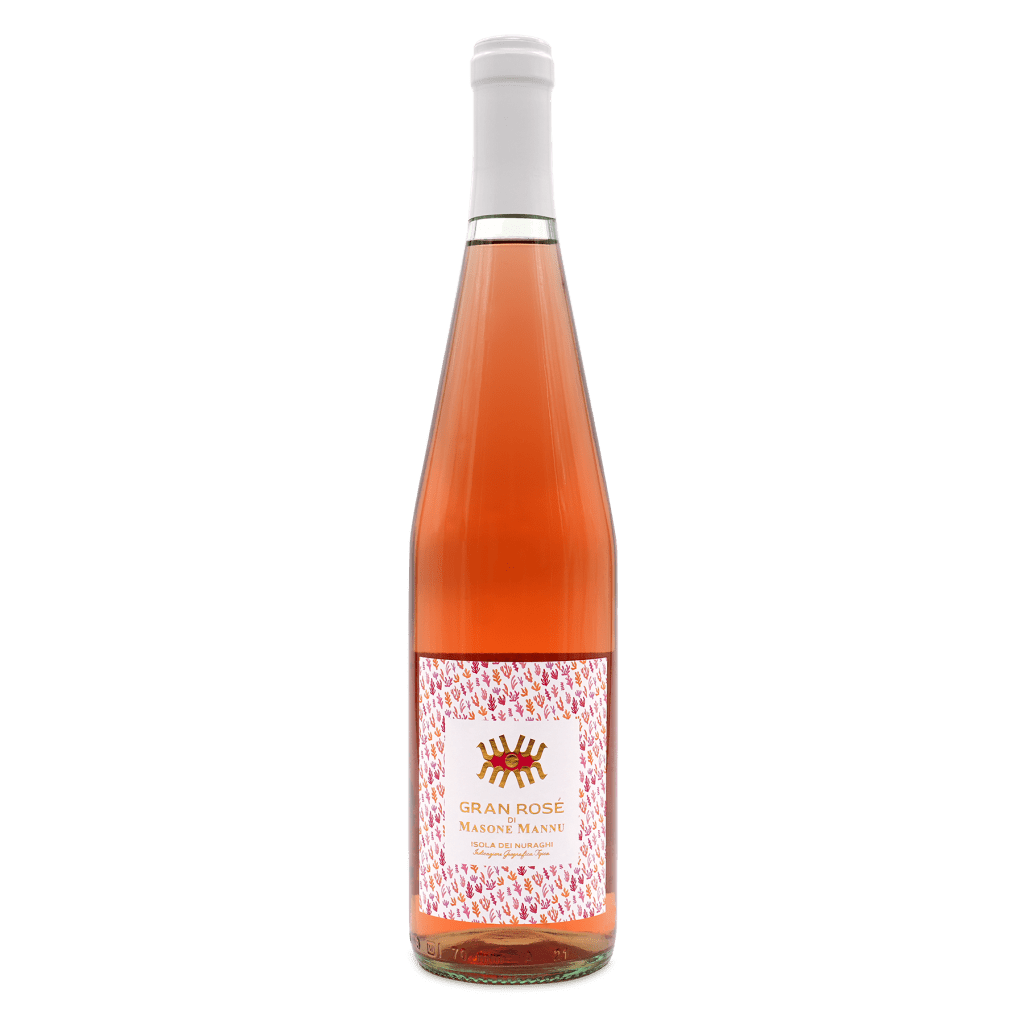
Tasting Profile
- Appearance: Bright pale pink with delicate salmon and subtle orange reflections.
- Nose: Medium(+) intensity, offering attractive aromas of redcurrant, wild strawberry, raspberry, pomegranate, orange zest, and tangerine. These fruit notes are complemented by hints of white pepper and a delicate mineral character reminiscent of wet stones, a hallmark of the granite-rich soils of Monti.
- Palate: Dry, with medium acidity and 12.5% alcohol. The wine is medium-bodied, combining freshness with a surprisingly rounded texture. The palate feels smooth and almost creamy, yet remains lively thanks to its acidity and subtle mineral tension. Fine-grained tannins add structure without detracting from the wine’s elegance. Flavours mirror the nose, with bright red fruits, citrus notes, and a delicate bitter twist that enhances complexity.
- Finish: Medium(+), persistent and balanced. Lingering acidity and subtle mineral notes extend the finish, while the gentle tannic grip contributes additional texture and depth.
Final Thoughts
Gran Rosé is a fresh, approachable, and thoroughly enjoyable rosé that captures the spirit of contemporary wine drinking while retaining a distinct Sardinian identity. While stylistically it shares some similarities with the many Grenache-based rosés produced around the Mediterranean, it offers noticeably greater depth and texture than many Provençal examples.
Its combination of crisp red fruit, granite-driven minerality, subtle salinity, and a pleasantly rounded mouthfeel creates a wine that is both easy-going and surprisingly characterful. It also reflects Tenuta Masone Mannu’s broader commitment to vineyard practices aimed at expressing the character of the terroir as faithfully as possible.
Like most rosés, Gran Rosé is intended primarily for early enjoyment. While it can comfortably evolve for up to three years in bottle, preserving its freshness and perhaps gaining a touch more spice, ageing is not really the point. As the producer itself suggests, there is little reason to wait for a special occasion: simply open the bottle and enjoy it.
Served well chilled (around 6–8 °C), Gran Rosé is the quintessential summer apéritif wine. Picture a bottle resting in an ice bucket on a sunny terrace—whether in London, Cagliari, Brussels, or Hong Kong—and it becomes immediately clear why this style is so popular. Fresh, vibrant, and effortlessly drinkable, it is exactly the sort of wine that disappears faster than expected.
At the table, it pairs beautifully with delicate dishes. Its freshness and subtle texture make it an excellent companion for culurgiones, simple ravioli preparations (without tomato sauce), or seafood-based dishes such as shrimp or crab salads. The wine’s balance of fruit, minerality, and gentle bitterness allows it to complement food without overwhelming it.
A rosé that is uncomplicated in the best possible sense: elegant, refreshing, and deeply enjoyable.


Leave a Reply