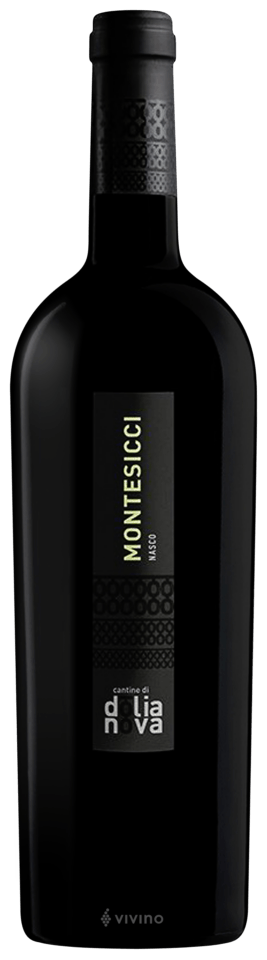
Today’s tasting note is dedicated to Montesicci, a varietal Nasco white wine produced by Cantine Dolianova, a major Sardinian co-operative based in the eponymous village of Dolianova, in the Parteolla region of southern Sardinia.
Montesicci 2024 is a striking expression of Nasco, one of Sardinia’s native grape varieties currently undergoing something of a renaissance. Traditionally associated with sweet white wines, Nasco is increasingly showing its potential in dry expressions, where its distinctive aromatic character, texture and richness can really come to the fore. Dolianova’s interpretation is a particularly interesting example.
I have already tasted other varietal expressions of Nasco, including Bessìu by Audarya and NSC by Quartomoro. Each reveals a slightly different side of the variety, showing how much room there is for interpretation depending on terroir and winemaking choices. Together, these wines make a compelling case for Nasco as one of Sardinia’s varieties with the greatest potential for further discovery.
Cantine Dolianova is one of Sardinia’s best-known co-operative wineries. Established in 1949 in Dolianova, in the heart of the Parteolla, the estate has grown considerably over the decades and today brings together around 300 member growers farming approximately 1,200 hectares of vineyards. This makes it one of the largest wine producers on the island. Its scale also allows Cantine Dolianova to maintain a broad and diversified portfolio, with a strong focus on Sardinian indigenous varieties. Montesicci is one of its more ambitious bottlings, alongside the red Terresicci, which I will review in a future post.
Vineyard and Winemaking
Montesicci is produced from grapes supplied by the co-operative’s members, mainly from Guyot-trained vineyards planted around Dolianova, Ussana and Serdiana.
The vineyards grow on medium-textured soils composed of clay-rich Miocene limestone, a combination that can contribute freshness, minerality and structure to the wines. The sub-arid climate helps keep yields naturally moderate while favouring concentration of aromas in the grapes.
The grapes are hand harvested at full ripeness and transported rapidly to the winery, where they undergo destemming and crushing. The must is then left in contact with the skins overnight at low temperature, allowing the extraction of aromatic compounds from the grape skins. It subsequently rests for a further twelve hours at low temperature, helping clarify the must before fermentation.
Selected yeasts are then inoculated and alcoholic fermentation takes place in stainless-steel tanks at a controlled temperature of 14°C, for approximately fourteen days.
Once fermentation is complete, Montesicci remains in an inert environment for several months, in contact with its fine lees, before its final refinement in bottle. This lees contact contributes additional texture and complexity without obscuring the distinctive character of Nasco.
Tasting Profile
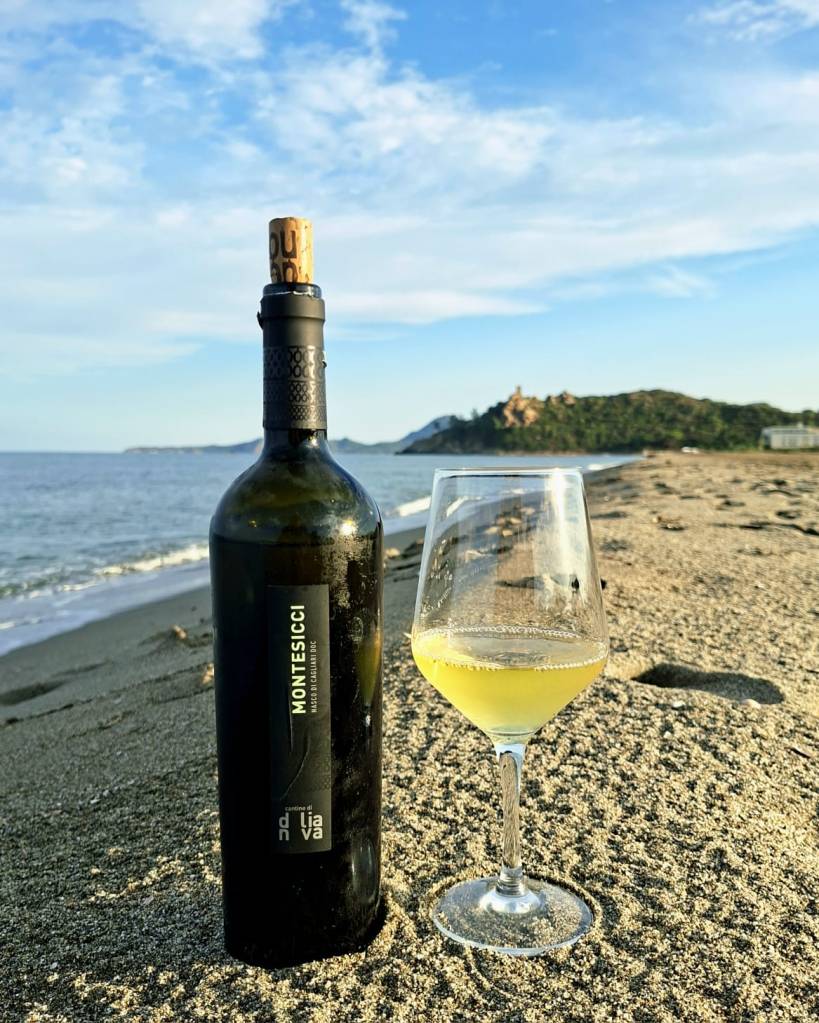
- Appearance: Bright medium lemon, almost light gold, with delicate green-lemon reflections.
- Nose: The wine has high aromatic intensity and an intriguing, remarkably complex bouquet. The first impression is dominated by Scotch broom and musk, the latter being one of the characteristic aromatic markers of Nasco. These are joined by hay, ripe apple and herbal notes of eucalyptus, rosemary, mastic and mint. A distinct saline dimension emerges through nuances reminiscent of capers and Kalamata olives. Ripe grapefruit adds a citrus component, while more developed aromas of yeast, almond paste and soft cheese introduce secondary and tertiary complexity. A final touch of candied ginger completes the bouquet.
- Palate: The wine is dry, with medium(+) acidity and a substantial 14% alcohol. Its most striking feature is the combination of full body, roundness and an almost oily texture, balanced by enough freshness to prevent the wine from feeling heavy. This textural richness is particularly characteristic of Nasco and gives the wine a distinctive personality. The flavours largely mirror the aromatic profile, with herbal and saline notes complemented by a balsamic and gently bitter character that adds further complexity. The alcohol contributes to the wine’s sense of substance and structure.
- Finish: The finish is medium(+), with a delicate bitterness and a subtle astringency that provide an interesting counterpoint to the wine’s oily texture. The musk and almond-paste notes remain particularly persistent, giving the final stages of the tasting a distinctive character.
Final Thoughts
Montesicci is a gourmand wine, but not in the sense of being simply rich or fruity. Its appeal lies in its texture, aromatic complexity and distinctive savoury character. The full body and round, almost oily mouthfeel show the potential of Nasco in a dry style, while its aromatic profile moves well beyond primary fruit.
Indeed, Montesicci is surprisingly restrained in terms of fruit aromas. Instead, it offers a fascinating combination of herbal, saline and balsamic notes, complemented by secondary and tertiary nuances of yeast, almond paste and soft cheese. The result is a wine that feels quite different from many of the lighter, fruit-driven whites typically associated with summer drinking.
This is therefore a wine that I would primarily enjoy with food, rather than simply as an aperitif. Its generous texture, balanced by sufficient acidity, should work particularly well with richer fish dishes, such as grilled salmon or sole with beurre noisette. It could also be a surprisingly good match for the savoury richness of tinned sardines, where the wine’s acidity and saline character would provide a useful counterpoint to the oiliness of the fish.
If you want to appreciate Montesicci on its own, I would actually suggest drinking it after dinner, when there is more time to explore its evolving aromatic profile without the distraction of food.
When served with food, I would recommend a temperature of around 10°C, rather like a fuller-bodied white Burgundy. On its own, however, I would serve it slightly cooler, around 6–8°C, allowing its crisp herbal and saline notes to emerge more prominently.
Montesicci is best enjoyed relatively young, when its primary and aromatic characteristics are at their most expressive, but it should also have sufficient structure to develop for around five years in bottle. With slightly higher acidity, I would be even more confident about its long-term ageing potential. Nevertheless, the wine is another encouraging demonstration of just how much Nasco can offer as a dry white grape, and why this rediscovered Sardinian variety deserves increasing attention.


Leave a Reply