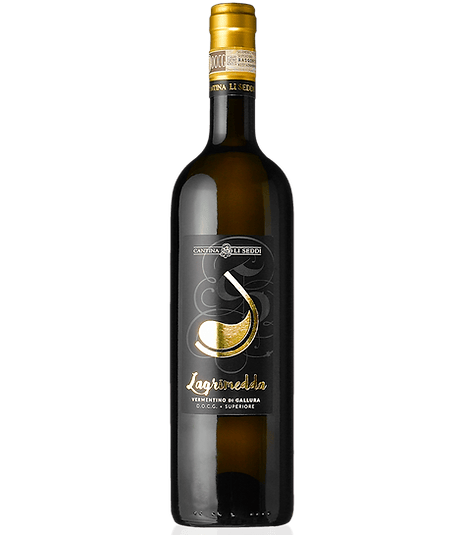
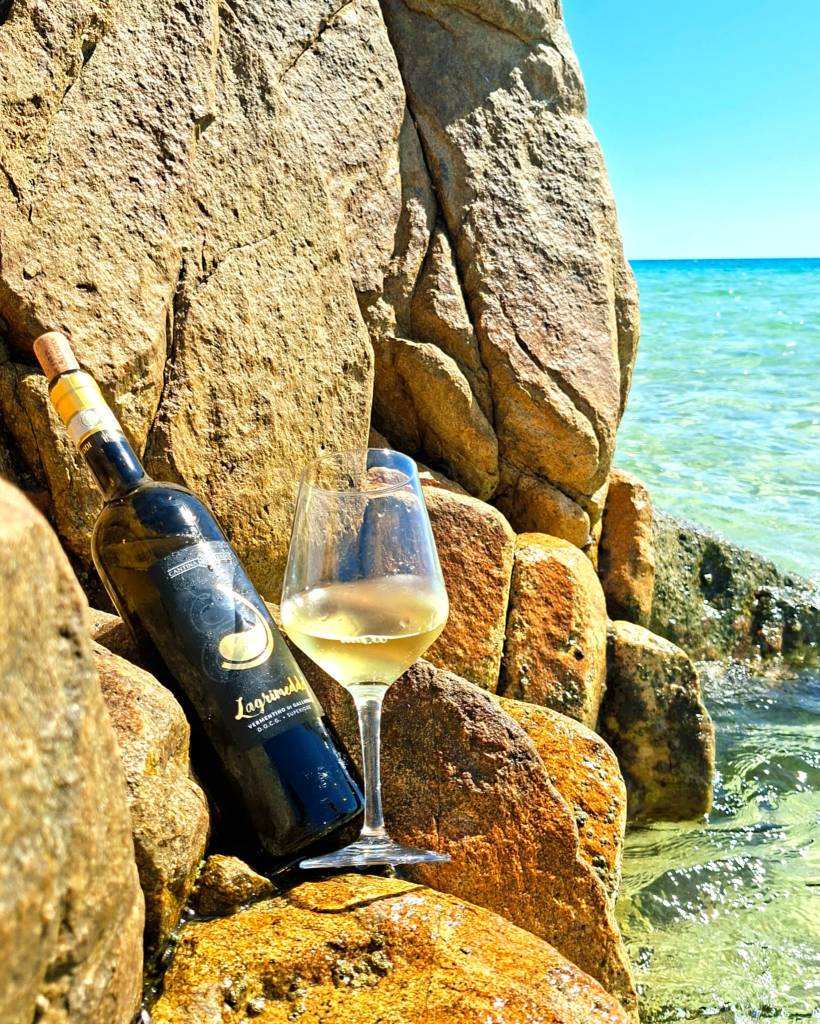
Today’s tasting note is dedicated to Lagrimedda, a varietal Vermentino di Gallura produced by Cantina Li Seddi in Badesi, in northern Sardinia.
Lagrimedda is one of the most representative wines of Cantina Li Seddi and, more broadly, a compelling expression of the characteristics that make Vermentino di Gallura so distinctive. Here, the combination of granite-rich sandy soils, proximity to the sea and strong day-night temperature variation produces a wine of remarkable precision and purity, with intense yet elegant aromas, pronounced minerality and a distinct saline character.
Lagrimedda is a Vermentino di Gallura Superiore, a designation associated with stricter production requirements, including lower maximum yields compared with standard Vermentino di Gallura.
Cantina Li Seddi produces most of its wines in the countryside around Badesi, in the lower Gallura, close to Sardinia’s northern coast. It is a relatively small estate, with around 13 hectares under vine and annual production of approximately 50,000 bottles. Two characteristics particularly distinguish the estate. First, much of its production comes from ungrafted vines, made possible by the sandy soils of the area, which are naturally less favourable to phylloxera. Second, the winery makes use of indigenous yeasts, seeking to preserve a strong connection between the wines and their local terroir. Alongside Lagrimedda and its other Vermentino wines, such as Li Pastini, Cantina Li Seddi is also developing a reputation for its sparkling wines.
Vineyard and Winemaking
Lagrimedda is produced from Vermentino grapes grown in small vineyards in the lower Gallura, in the municipality of Badesi, close to the coast. The vineyards are well exposed to the south, benefiting from sea breezes and significant nocturnal temperature variation, which help preserve freshness and enhance the aromatic expression of the grapes.
The wine is made exclusively from Vermentino grown on its own roots, planted on very fine white sand derived from the decomposition of granite, just a short distance from the sea. The grapes are hand harvested towards the end of September at full maturity and rapidly transported to the winery. They undergo white vinification in stainless-steel tanks at controlled temperature, with fermentation carried out using indigenous yeasts. The wine is then bottled and aged for a few months before sale.
Tasting Profile
- Appearance: Pale lemon, with delicate green-lemon reflections.
- Nose: The wine has medium(+) aromatic intensity, with an intriguing bouquet combining orange blossom, white blossom and Scotch broom, all typical aromatic markers of Vermentino, with green apple, orange and lemon zest, white and yellow peach, apricot, green almond and almond paste. These fruity and floral notes are complemented by melon, a mineral nuance reminiscent of wet stones, and delicate herbal notes of juniper and mastic.
- Palate: The wine is dry, with high acidity and 14% alcohol, providing an excellent balance between freshness and substance. It is medium-bodied and remarkably elegant and refreshing, with a lean, vibrant texture supported by pronounced minerality and a delicate astringency. The saline character becomes particularly evident on the palate, adding another dimension to the wine and reinforcing its maritime personality. The flavours largely mirror the aromatic profile, with the citrus and stone-fruit notes complemented by the wine’s mineral and saline character.
- Finish: The finish is medium(+), with considerable stability, structure and persistence. A delicate touch of bitterness, typical of many Vermentinos, adds further complexity, while the wine’s length is particularly striking for its style.
Final Thoughts
Lagrimedda is an elegant, vibrant and remarkably persistent Vermentino, which remains accessible while offering considerably more depth than its first impression might suggest.
What makes the wine particularly interesting is the way in which its different elements come together to provide a coherent expression of Vermentino di Gallura and its terroir. The proximity to the sea is reflected in its saline character, while the granite-derived sandy soils contribute to its mineral and lean profile. The use of ungrafted vines and indigenous yeasts further connects the wine to the particular environment in which it is produced.
Its aromatic profile also provides a very precise reading of Vermentino. The familiar markers are all there—almond, blossom and citrus fruit—but they are presented alongside juniper, mastic, wet stones and saline nuances. The result is a wine that feels somewhat more restrained and nervy than some of the more generous, fruit-driven expressions of Vermentino di Gallura.
This makes Lagrimedda perhaps a slightly more demanding introduction to the appellation, but also a more rewarding one for those interested in exploring the terroir and structure behind the variety.
The combination of high acidity and 14% alcohol should allow the wine to develop for several years, perhaps around five years, although I would still favour drinking it relatively young, when its fresh fruit and aromatic precision are at their most expressive. I would serve it at around 6–8°C, particularly in summer, to emphasise its crispness and freshness.
Lagrimedda works beautifully as an aperitif, where its elegance and saline character can really shine. It is also sufficiently structured and aromatic to work very well with food. The combination of citrus and ripe peach makes it a natural partner for crustaceans or aragosta alla catalana, while its vibrant acidity should cut beautifully through grilled sea bass or sea bream.
Its aromatic intensity and freshness could even make it an interesting match for soft cheeses, from burrata to Brie.
A versatile and distinctive Vermentino di Gallura, and a particularly elegant expression of what the vineyards around Badesi can offer.


Leave a Reply