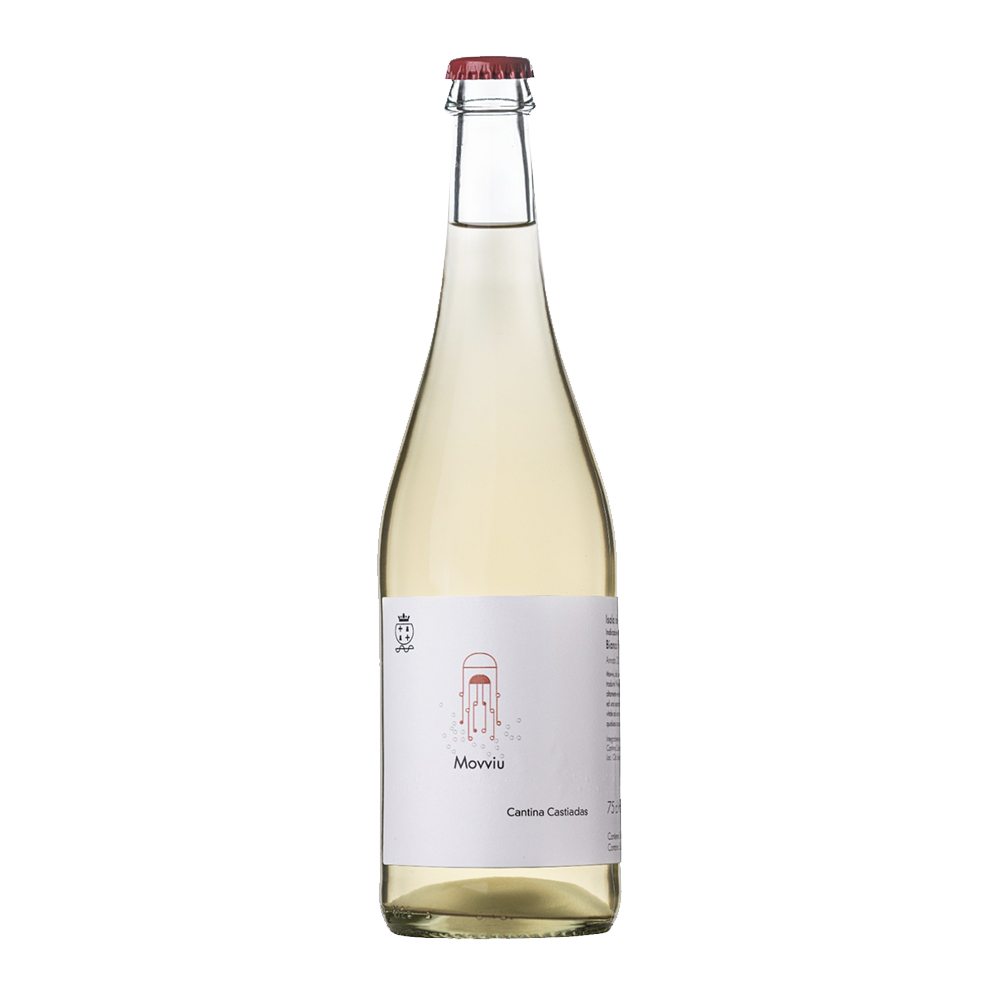
Today’s tasting note is dedicated to Movviu, a sparkling white wine produced by Cantina Castiadas as a sort of blanc de noirs, using 100% Cannonau grapes vinified in white and followed by a natural second fermentation in the bottle, with the yeast remaining inside.
This is one of several examples of sparkling wines that are bubbling all over Sardinia nowadays. In line with broader trends in the wine world, sparkling wine production is increasing in Sardinia—traditionally not a major sparkling-wine region—both in terms of quantity and quality. Consumers are increasingly drawn to lighter, fresher and more immediately drinkable wines. And, after all, bubbles are an everyday luxury.
Sardinian winemakers are therefore experimenting with different sparkling-wine production methods and grape varieties. Movviu by Cantina Castiadas is a particularly innovative and intriguing interpretation, not least because it turns one of Sardinia’s most famous red grapes into a refreshing sparkling white.
Cantina Castiadas is a co-operative estate based in the village of Castiadas, in the Sarrabus region of south-eastern Sardinia. Established in 1959, it currently manages around 150 hectares of vineyards through a network of approximately 300 grower members. Over the years, Cantina Castiadas has established a reputation for high-quality red wines based on Cannonau, which in this area can carry the prestigious Capo Ferrato sub-designation. More recently, the winery has started experimenting with new styles while continuing to work with Cannonau, particularly sparkling wines, ranging from pet-nat-style wines such as Movviu to traditional-method expressions.
Vineyard and Winemaking
Although Cannonau is best known as a red grape variety, Cantina Castiadas uses it in a remarkably creative way to produce a sparkling white wine.
The grapes destined for Movviu are harvested slightly earlier than those intended for red Cannonau, in order to preserve a greater level of acidity and freshness while avoiding excessive sugar accumulation and, consequently, excessive potential alcohol.
Once harvested, the red Cannonau grapes are gently pressed and the juice is immediately separated from the skins. Since the flesh and juice of most red grapes are naturally clear, avoiding prolonged skin contact prevents significant extraction of colour and tannins, resulting in a bright, pale base wine.
The clear juice is then transferred to temperature-controlled stainless-steel tanks for the first alcoholic fermentation, producing a fresh, still white wine.
The second fermentation takes place in bottle, following an approach broadly comparable to the ancestral method and, in terms of lees remaining in the bottle, reminiscent of col fondo wines. The remaining sugars and yeast undergo a natural second fermentation, producing carbon dioxide that is trapped in the bottle and creates the wine’s delicate sparkle.
There is no disgorgement, meaning that the spent yeast remains in the bottle. This gives Movviu its characteristic hazy appearance when the sediment is stirred into the wine and contributes additional texture and savoury, yeasty complexity.
Tasting Profile
There are two ways of approaching Movviu. The bottle can be left upright in the refrigerator for a day, allowing the sediment to settle completely at the bottom, resulting in a clearer wine. Alternatively, the bottle can be gently inverted before opening, redistributing the sediment throughout the wine and producing a cloudier, creamier and more textured expression.
I chose the latter approach, which I think suits the character of Movviu particularly well.
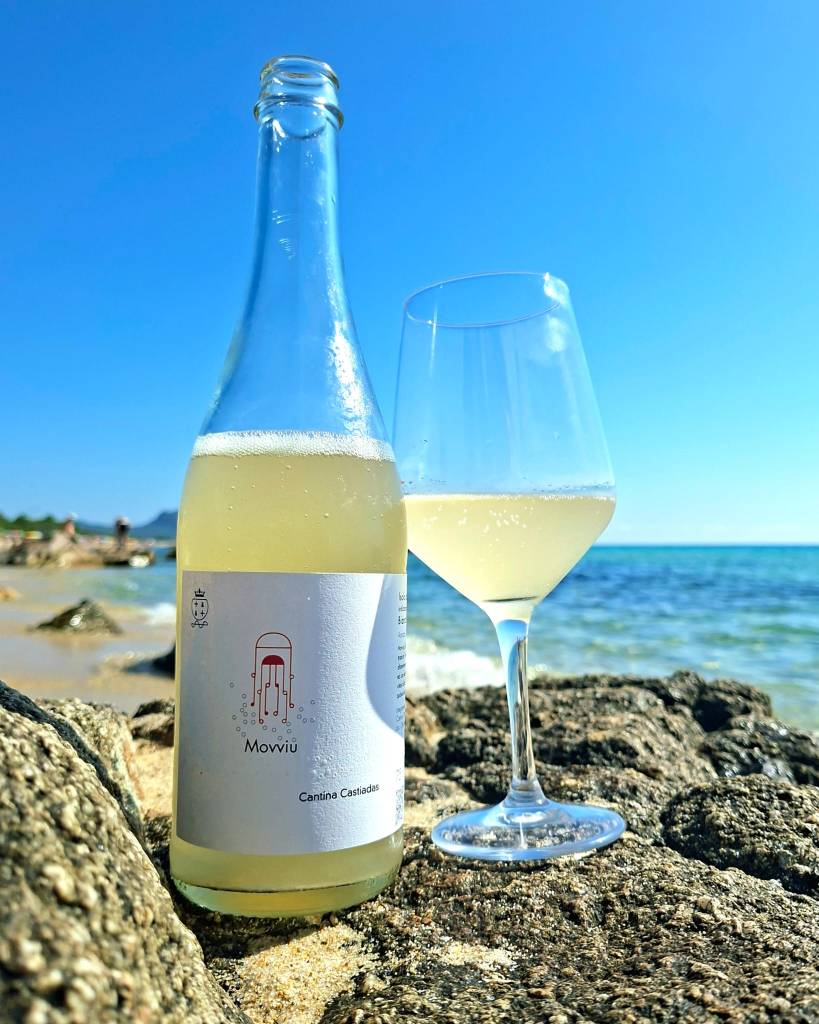
- Appearance: Hazy, pale lemon, with a delicate sparkle. The suspended yeast gives the wine a cloudy appearance, making it look almost white depending on the light.
- Nose: The wine has a fresh and expressive bouquet, highlighting the versatility of Cannonau in a sparkling style. The first layer is dominated by fresh and fruity aromas of blossom, yellow apple, lemon, lemon zest and white peach. These are complemented by appealing secondary aromas of yeast, cream, fresh cheese and bread crust, adding a savoury dimension to the otherwise bright and fruity profile.
- Palate: The wine is dry, with medium(+) acidity and 12% alcohol, making for an extremely refreshing and easy-drinking combination. It has a medium(-) body, with a lean but pleasantly textured profile. The flavours largely mirror those found on the nose, while a delicate saline note adds further complexity. The fine, delicate perlage contributes to the wine’s freshness while also giving it a subtle sense of creaminess.
- Finish: The finish is medium, with a lingering saline note that reinforces the impression of freshness and leaves the palate clean. The combination of acidity, salinity and subtle yeasty notes gives the wine more character than its relatively simple structure might initially suggest.
Final Thoughts
Movviu is a relatively simple and easy-drinking sparkling wine—but it is a wine that deserves attention.
First, because it delivers exactly what it promises: a clean, refreshing and highly drinkable sparkling wine. Second, because it offers a remarkably original interpretation of Cannonau, a grape normally associated with powerful, generous and sometimes opulent red wines.
There is something wonderfully spontaneous about Movviu. Its combination of fresh fruit, yeast, bread crust and delicate cheese notes, together with its freshness and subtle salinity, makes it quite different from many conventional sparkling wines.
I could easily imagine this bottle in a Parisian natural wine bar, accompanying a long conversation with friends. It has enough personality to remain interesting, but not so much structure that it demands your full attention. In other words, it is a wine that invites you to drink another glass.
The lees contact also gives Movviu a slightly more rustic and savoury character than a conventional sparkling wine, while the saline finish adds another dimension to its otherwise straightforward freshness.
This is, however, very much a wine for immediate enjoyment. I would not recommend bottle ageing: the freshness and spontaneity of Movviu are precisely what make it so appealing. Once you get the bottle, open it and drink it.
I would serve it well chilled, at around 6–8 °C; even 4–6 °C would not be unreasonable if the weather is particularly warm. If serving it cloudy, remember that the sediment will continue to integrate into the wine as the bottle is poured, so the final glasses may be progressively richer and more textured.
In terms of food pairing, Movviu is naturally suited to an aperitif, but its yeasty and savoury character gives it plenty of possibilities at the table. A cheese platter, from Camembert to Comté, accompanied by crackers and a touch of mustard, would work particularly well. For a more adventurous combination, I would try it with oysters: the wine’s salinity could reinforce the natural brininess of the shellfish. Its vibrant acidity would also make it a good partner for fried food, such as vegetable tempura.
Ultimately, Movviu is less about complexity than about originality, freshness and drinkability. And in a region increasingly experimenting with bubbles, it is another fascinating example of how Sardinia’s native grapes can be taken in unexpected directions..


Leave a Reply